
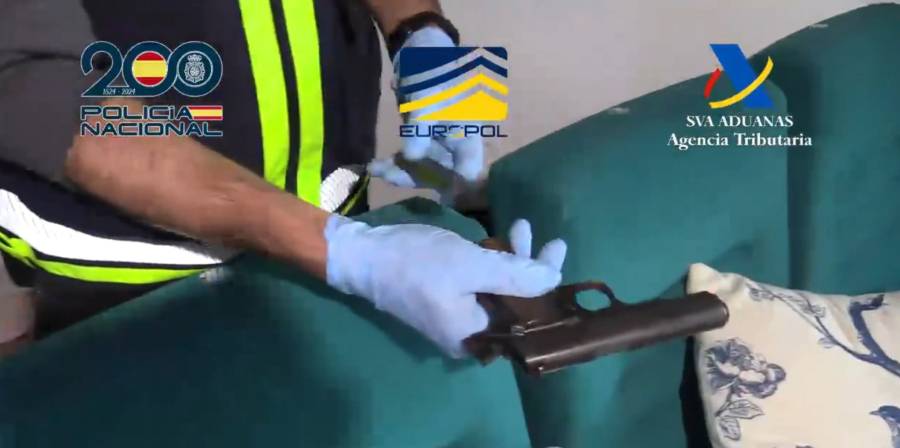
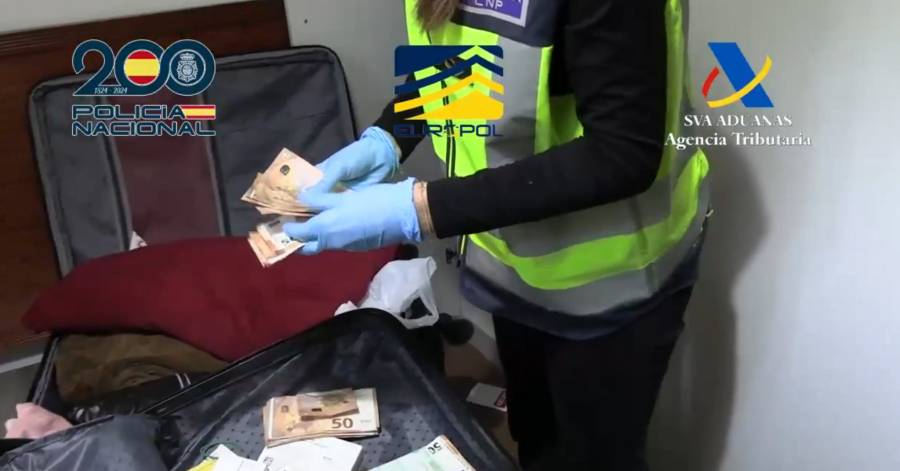
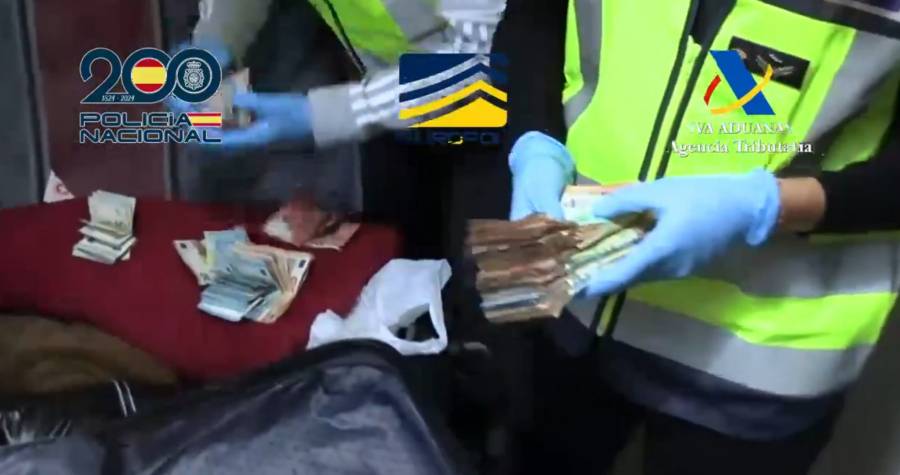
On 17 December, law enforcement conducted raids at 14 properties across Barcelona (4), Madrid (9), and Toledo (1) in Spain, and one property in Zagreb in Croatia. These operations resulted in 30 arrests, among which were the leaders of the criminal network. In addition, EUR 180 000 in cash was also seized, alongside weapons, 70 passports, equipment to falsify passports and visas, narcotic substances, 10 high-end vehicles and 33 mobile phones. A total of 33 victims – Chinese and Vietnamese nationals – were also safeguarded.
This investigation builds on the dismantling of Europe’s largest Chinese prostitution ring in February 2023. Digital evidence seized during that operation has since then been meticulously analysed, including at a forensic sprint held at Europol’s headquarters in March 2023. During this sprint, experts from nine countries extracted tens of terabytes of data from hundreds of confiscated mobile phones.
The new intelligence provided unprecedented insights into the methods used by Chinese criminal networks in Europe, revealing a sophisticated division of labour and reliance on crime-as-a-service actors.
Two cells, one exploitation chain
The criminal organisation, composed primarily of Chinese nationals, profited significantly from the sexual exploitation of vulnerable women. To maximise profits, the group engaged in additional criminal activities, including document fraud, money laundering, and the facilitation of illegal immigration.
Victims were lured into prostitution in Europe under the promise of earning high income within a short timeframe. However, upon arrival, they were subjected to severe debt bondage and trapped in a cycle of exploitation they were unable to escape due to their vulnerabilities and dependence on the traffickers.
The organisation operated in two interconnected cells:
- Recruitment and smuggling cell: Victims were recruited in China through “travel agencies” where they disguised the exploitation by presenting prostitution opportunities as legitimate employment abroad. Using the Western Balkan corridor, the smuggling cell coordinated with local facilitators and drivers to illegally transport victims into the EU. Safe houses were maintained along the route, with logistics managed through instant messaging apps.
- Exploitation cell: Once in Europe, victims were initially exploited in entry-point countries. Later, they were transferred to Spain and other Member States, where they were forced to work in brothels or short-stay facilities. Victims were rotated between cities and across borders to evade detection and meet the growing demand for sexual services. The organisation maintained strict control over every aspect of the victims’ lives, taking 50% of their earnings even after their debts were repaid.
A highly organised and resilient network
The smuggling operations were meticulously coordinated through instant messaging apps, with facilitators managing safe houses along the route and providing instructions on victim transport. Upon arrival, victims were initially exploited in entry-point countries before being transferred to Spain and other EU Member States, where their exploitation continued under the strict control of the criminal group.
Victims trafficked by the group were identified in exploitation networks across multiple EU countries, underscoring the scale and resilience of this criminal network.
International cooperation leads to success
The operation was led by the Spanish National Police (Policía Nacional) in close cooperation with the Croatian National Police (Policija) and Europol.
The Agency supported national authorities by enabling the exchange of critical intelligence and providing expert analytical support. On the action day, Europol deployed two experts to Madrid and Barcelona, where they worked alongside investigators, cross-checking real-time operational data, assisting with operations on the ground, and conducting forensic extractions of mobile phones used by the suspects.
This investigation is part of a wider operational taskforce at Europol, dedicated to combating Chinese human trafficking networks. Involving 11 countries, the taskforce is focused on dismantling these criminal groups operating across Europe.
More information: EUROPOL.
Publicaciones relacionadas:
 Operations co-funded by the EU lead to 197 arrests in Spain
 Spain dismantles criminal network smuggling migrants from Algeria to the EU
 54 individuals arrested in action against labour exploitation
34 arrests in Spain during action against the ‘Black Axe’ criminal organisation
54 individuals arrested in action against labour exploitation
34 arrests in Spain during action against the ‘Black Axe’ criminal organisation
 Spain dismantle a terrorist organisation recruiting and indoctrinating women
Leave a Reply