
25 years ago, on 1 January 1999, the euro came into force as the single currency for 11 EU Member States. It now serves the economy and eases life for 350 million people in 20 countries.
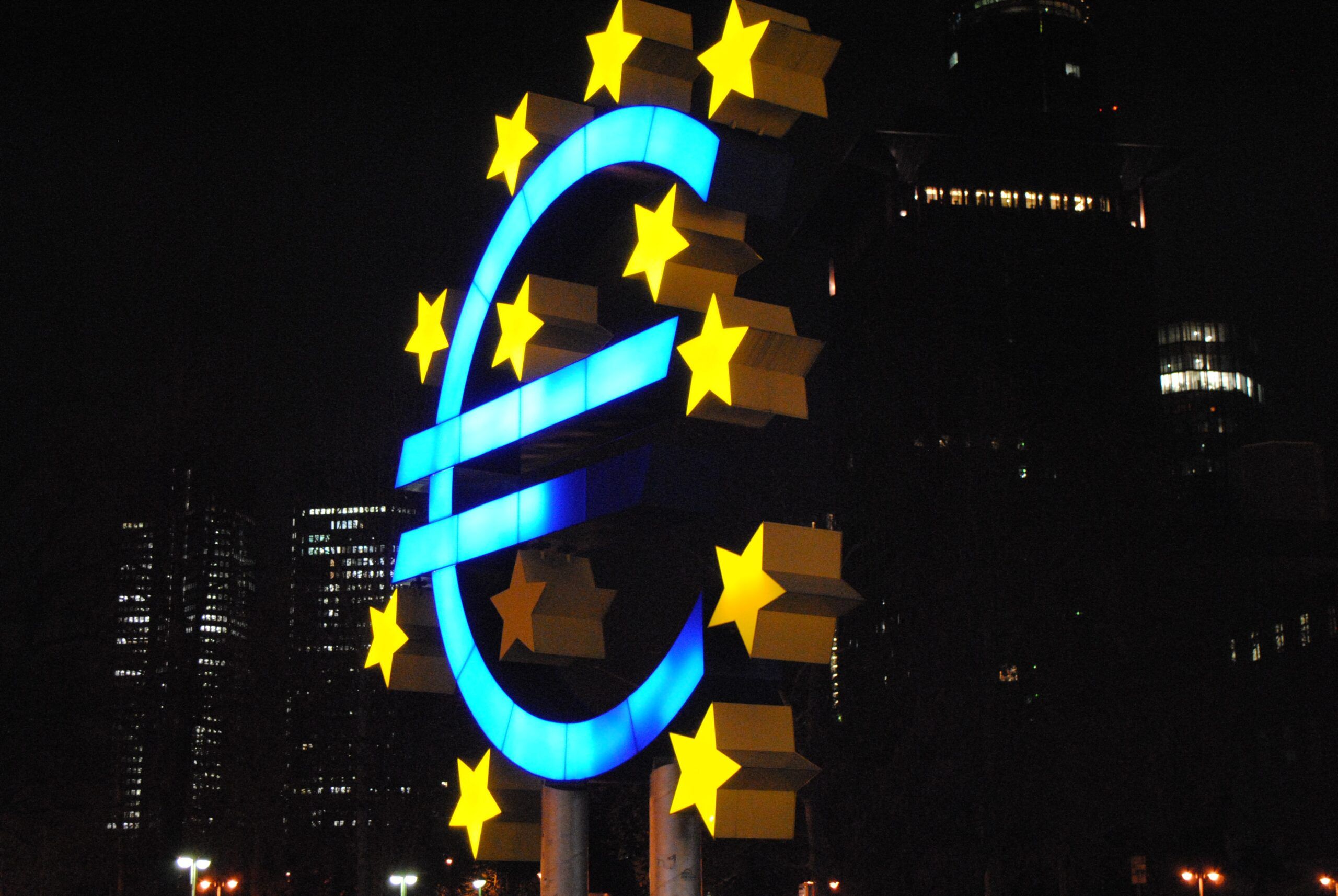
The case for Europe has always rested on solving problems that countries could not address alone. After the Second World War, visionary leaders understood that the only way to secure peace on our continent was to unite our economies. And a united Europe would, in time, require a single currency to make the most of the economic benefits created by this peace dividend.
In the late 1980s, as Europe took further steps to deepen its single market, the dream of a single currency became a project. And 25 years ago – on 1 January 1999 – that project became a reality. Today, the euro is an indispensable part of our daily life, giving us simplicity, stability and sovereignty.
It has made life simpler for European citizens, who can easily compare prices, trade and travel. It has given us stability, protecting growth and jobs amid a series of crises. And issuing the world’s second most important currency has given us greater sovereignty in a turbulent world. So it is no surprise that the euro area has grown from 11 to 20 countries since its foundation.
There have been tremendous challenges over the years, including questions about the future of the euro itself. But each time we have found the right answers. In response to the global financial crisis and sovereign debt crisis, for example, we established safeguards like the harmonised system of banking supervision and resolution or the European Stability Mechanism. Today, support for the single currency among euro area citizens is close to record levels.
But our work is not done. Because today we face new challenges that countries cannot address alone – and people are looking to Europe for answers.
We face rising geopolitical tensions, not least Russia’s illegal war against Ukraine, which calls for bold collective decisions. We confront an accelerating climate crisis that we can only truly solve together: carbon emissions do not stop at borders. And we face unprecedented challenges to our competitiveness from energy and industrial policies in other parts of the world.
This means that issues like defence, as well as the green and digital transitions, have become urgent matters of common interest. The same is true of how we approach financing the massive investment needed to decarbonise our economies, make our supply chains more secure and upgrade our technologies. In the EU, the green transition alone will require investments of €620 billion each year until 2030.
Solutions must embrace the scale made possible by working together in Europe. Building a genuine capital markets union that spans the continent to mobilise private finance. Using European tools and policies to strengthen our competitiveness and security, for example by reinforcing the existing structures through revamped fiscal rules and a more robust banking union. And bringing the single currency itself into the digital age, by preparing the foundations for a potential digital euro that can complement cash.
At the same time, with several countries currently in the process of joining the EU, we must retain our capacity to act decisively. Enlarging and deepening are not mutually exclusive. But enlargement may require changes to how the EU is organised.
The people of Europe know that the world is changing. And they understand that there is strength in unity. Around two-thirds of Europeans are convinced that the EU is a bastion of stability. So let us show them that Europe can shape this change and meet their expectations.
This will require ambition and perseverance – the very same qualities embodied by the founders of European integration. And it will require acknowledging that not all goals can be attained immediately. The lesson of European integration is that we have to take the steps that are in front of us when the moment arises. The other steps will follow when the time is ripe.
As the French writer Anatole France once remarked: “To accomplish great things, we must not only act, but also dream; not only plan, but also believe.” The first 25 years of the euro have shown just how successful a dream can be. But as the world changes around us, our action proves that a united Europe provides the answers the Europeans and the world need.
European Central Bank moves to the next stage of the digital euro project |
More information: Council of the European Union – Eurogroup




Leave a Reply