
Artificial intelligence (AI) is revolutionising medicine by helping doctors diagnose patients with increasing accuracy. Our medical history provides valuable information about potential health problems. But what if artificial intelligence could reliably predict our next diagnosis, a complication or even the time of death?
A team of researchers from the European Molecular Biology Laboratory (EMBL), the German Cancer Research Centre (DKFZ) and the University of Copenhagen has created Delphi-2M, an AI model capable of predicting medical risks more than ten years in advance. The model is presented in the journal Nature.
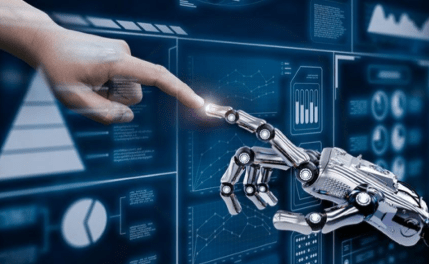
What’s in store for your health
Delphi-2M can estimate risk for more than 1,200 conditions, such as cancer, diabetes, heart disease and respiratory problems. It is less reliable when it comes to more random conditions, such as mental disorders and pregnancy. It does not calculate exact dates, but estimates the likelihood of disease.
Unlike ChatGPT and other AI chatbots, Delphi-2M does not predict words, but outcomes. Medical events often follow predictable patterns, so it learns those patterns to predict future health outcomes.
In a way, Delphi-2M offers a health prediction similar to that of a weather application. “Just like with the weather, where we can talk about a 70 percent chance of rain, we can now do the same for healthcare,” Ewan Birney, interim chief executive of EMBL, told the BBC. “And not just for one disease, but for all of them at the same time, something we’ve never been able to do before. I’m thrilled.
The researchers trained Delphi-2M with data from Biobank in the UK: a large biomedical database that collects information from nearly half a million participants. To demonstrate the model’s performance, they tested it on data from nearly two million people in Denmark’s public health database.
“Our AI model is a proof of concept, showing that it is possible to learn many of our long-term health patterns and use that information to generate relevant predictions,” Birney commented in a DKFZ press release. “By modelling how diseases develop over time, we can begin to investigate when certain risks emerge and how to better plan early interventions. They represent a big step towards a more personalised and preventive approach to healthcare.”
A story that unfolds over time
Delphi-2M takes the patient’s medical history as a starting point. From there, it predicts the probability of the next health event in their life and the estimated time until it occurs. “Just as large linguistic models can learn the structure of sentences, this AI model learns the ‘grammar’ of medical data to model medical histories as sequences of events that unfold over time,” explained Moritz Gerstung, head of the Department of AI in Oncology at DKFZ.
“This is the beginning of a new way of understanding human health and disease progression,” Gerstung concluded. “Generative models like ours could one day help personalise healthcare and anticipate health needs on a large scale. By learning from large populations, these models are a valuable tool for analysing how diseases progress and could ultimately lead to earlier and more personalised interventions.
More information: CORDIS
Publicaciones relacionadas:
 Commission approves up to €403 million in State aid for major EU healthcare project
 Artificial intelligence aids respiratory assistance
 TRICARIX: Advances in minimally invasive treatment for the tricuspid valve
 Artificial intelligence to prevent future pandemics
 Commission restricts Chinese participation in medical devices procurement
Leave a Reply