
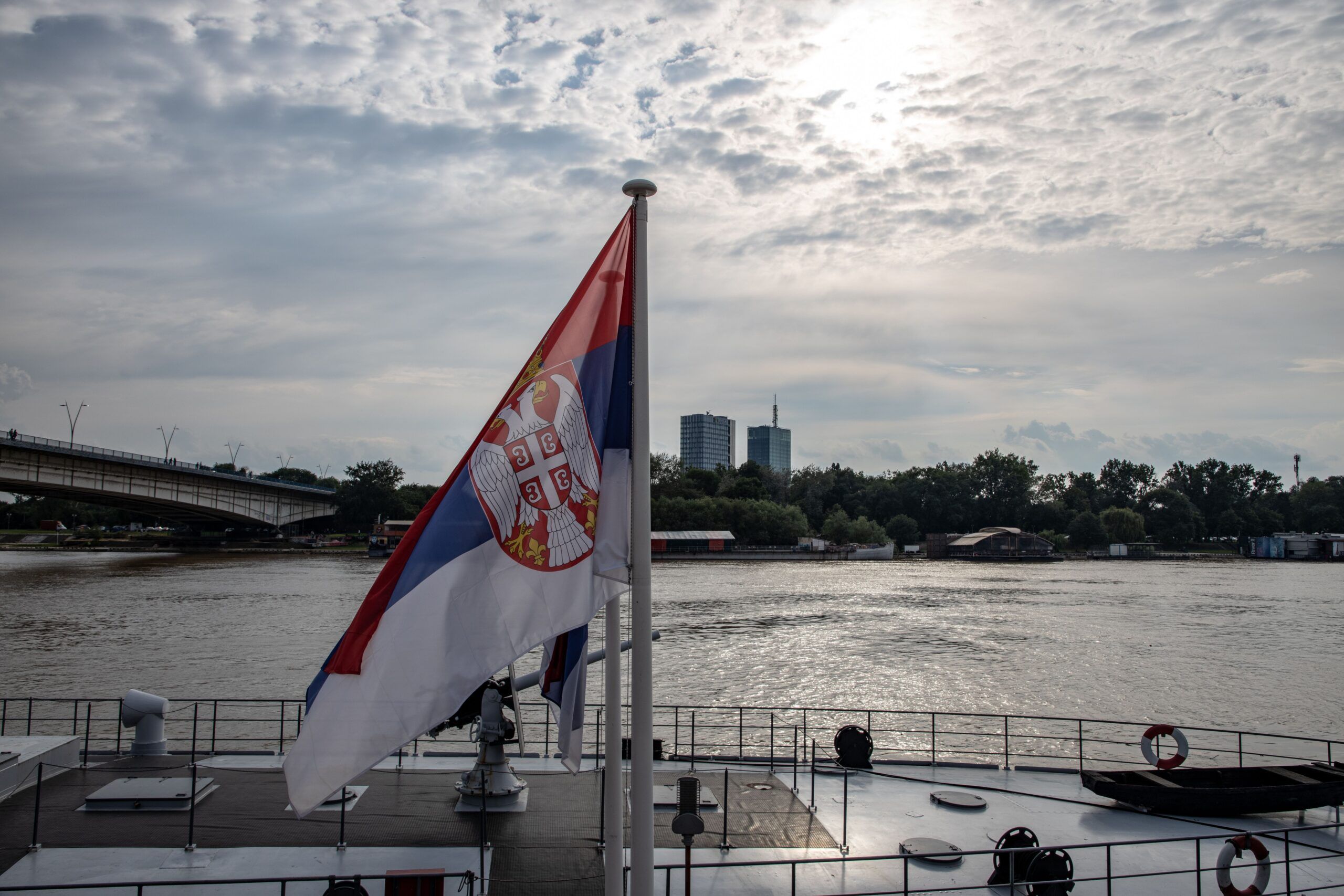
The Serbian government continues to assert that EU accession is its strategic objective, but MEPs warn that this is often not reflected in its actions.
Progress towards EU accession involves not only adopting reforms, but also their thorough and comprehensive implementation, MEPs warn in a report on Serbia adopted on Wednesday with 468 votes in favour, 116 against and 79 abstentions. There is a persistent gap between Serbia’s legislative alignment with EU standards and the effective implementation of reforms, which continues to undermine the country’s progress, the report notes.
MEPs also stress that each country’s path towards EU integration must be assessed on its own merits and that no country should be linked to another or treated as part of a package.
Respect for effective democratic mechanisms
MEPs argue that Serbia’s EU accession negotiations should only move forward once measurable and sustainable progress has been made in areas such as the rule of law, free and fair elections, the fight against corruption and organised crime, judicial independence, freedom of the press, public administration reform and improvements to the functioning of democratic institutions. Concerned about its ‘conciliatory approach’ towards Serbia, MEPs want the Commission to reflect any significant setbacks in the pace and intensity of reforms in Serbia in the financial support the EU provides through its pre-accession funding instruments. They also point out that the normalisation of relations with Kosovo is a condition for receiving support under the Reform and Growth Plan.
Relations with Russia and China
MEPs regret Serbia’s close ties with Russia and its growing cooperation with China on security and defence matters, which raises concerns about the country’s strategic orientation. They emphasise that full alignment with the EU’s common foreign and security policy remains a non-negotiable requirement for accession, including alignment with the EU’s restrictive measures against Russia.
Deepening political crisis
MEPs point to the low level of public support for Serbia’s accession to the EU, fuelled by a manipulative and long-standing anti-European narrative spread by government-controlled media, as well as by some senior Serbian officials and members of the ruling party, even at the highest level. They urge the EU to step up cooperation with Serbian non-governmental organisations to strengthen democratic resilience and counter hybrid threats. Expressing concern at the deepening political crisis in Serbia, against the backdrop of mass protests that have been sweeping the country since November 2024, MEPs state that the best way to resolve the crisis is through the holding of genuinely free and fair elections.
Quote
Rapporteur Tonino Picula (S&D, Croatia) stated: “My report concludes that Serbia’s EU accession process has stalled due to democratic backsliding, the weakening of the rule of law, the failure to implement key reforms and a lack of alignment with EU foreign policy. Despite continually reaffirming its strategic commitment, Serbia’s political leadership has so far shown little political will to undertake reforms or align itself with the values and policies necessary for accession.”.
More information: European Parliament
Publicaciones relacionadas:
 European and World Day against the Death Penalty: Joint statement by the European Union and Council of Europe
 G7 leaders united in supporting Ukraine
 MEPs approve updated EU-Ukraine road transport agreement
 European institutions agree on a roadmap to achieve “One Europe, One Market” by the end of 2027
 Breaches of EU values: how the EU can act
Leave a Reply