• Skip to primary navigation
  • Skip to main content
  • Skip to primary sidebar
  • Skip to footer
  • Bluesky
  • Facebook
  • Instagram
  • Twitter
  • YouTube
CDE Almería – Centro de Documentación Europea – Universidad de Almería

CDE Almería - Centro de Documentación Europea - Universidad de Almería

Centro de Documentación Europea de la Universidad de Almería

  • HOME
  • WHAT´S ON
    • EU NEWS
    • Activities
    • EU Calls and Awards
    • Radio Program «Europe with You»
  • DOCUMENTATION
    • EU Media Collection
      • Web Space
      • MEDIATHEQUE REPOSITORY
  • Europe on the net
    • Institutions
    • EU Representation in Spain
    • European information network of Andalusia
  • ABOUT US
    • Presentation
    • Services
    • People
    • Contact
  • Spanish
  • English

PhD – Neuroscience, AI and Medicine – Exploring Neural Mechanisms of Movement – Netherlands

Inicio » EU Calls and Awards » Euraxess » Health Sciences » PhD – Neuroscience, AI and Medicine – Exploring Neural Mechanisms of Movement – Netherlands

23 de September de 2025

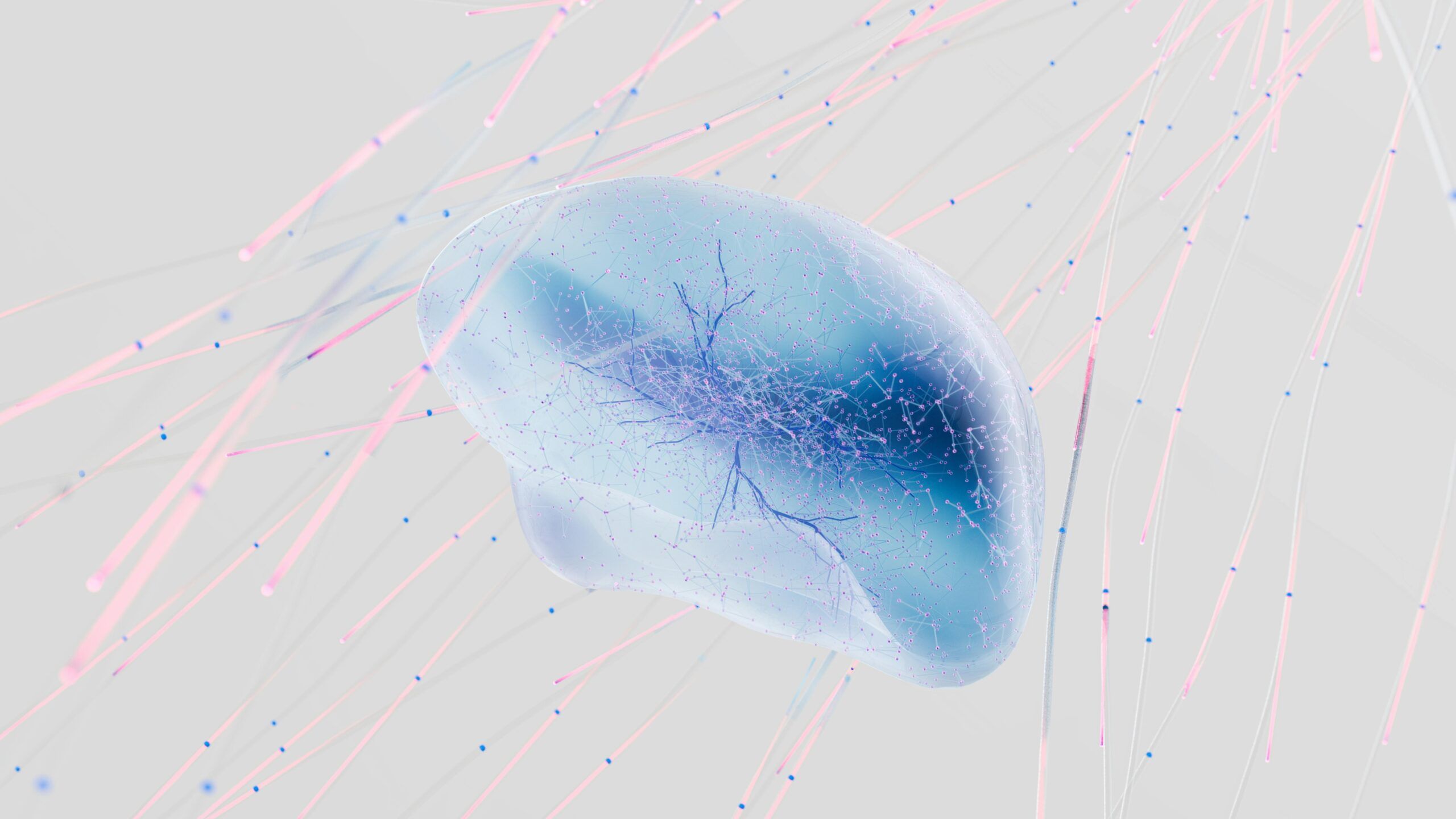
Are you an enthusiastic young scientist eager to work at the intersection of neuroscience, artificial intelligence, and medicine? Do you hold a Master’s degree that has equipped you with strong skills in mathematics and programming, and do you have a keen interest in neurobiology? If so, Radboud University invites you to apply for a fully funded PhD position within their team.

Losing the ability to precisely time movements can lead to debilitating motor disorders. Their research addresses this challenge in two ways:

  1. They investigate the fundamental neural mechanisms that control movement.
  2. They explore engineering-based solutions to restore function when these pathways are disrupted.

As a PhD candidate, you will contribute to both aspects, from studying the brain’s control of movement to applying these insights in the development of closed-loop brain–computer interfaces aimed at restoring motor function in models of motor disorder. Some part of the role may involve teaching and up to 0.1 FTE of your time may entail teaching activities.

A fully funded PhD position is available starting in January 2026. You will receive comprehensive training and mentoring within an interdisciplinary and international research environment. This position offers excellent opportunities to present your work at academic conferences, engage in collaborative research projects, and actively develop both your academic and professional profile.

Requirements

  • You hold a Master’s degree in neuroscience, electrical engineering, computer science or a related discipline.
  • You have experience in empirical research in neurophysiology or computational neuroscience/machine learning.
  • You possess solid programming and software engineering skills.
  • You have excellent written and spoken English skills.
  • You are a proactive team player, who enjoys engaging with others at network-wide training events.

Benefits

  • They will give you a temporary employment contract (1.0 FTE) of 1.5 years, after which your performance will be evaluated. If the evaluation is positive, your contract will be extended by 2.5 years (4-year contract).
  • You will receive a starting salary of €3,059 gross per month based on a 38-hour working week, which will increase to €3,881 in the fourth year (salary scale P).
  • You will receive an 8% holiday allowance and an 8,3% end-of-year bonus.
  • They offer Dual Career Coaching. The Dual Career Coaching assists your partner via support, tools, and resources to improve their chances of independently finding employment in the Netherlands.
  • You will receive extra days off. With full-time employment, you can choose between 30 or 41 days of annual leave instead of the statutory 20.

Organization/Company – Radboud University.

Research field – Computer science » Programming

Neurosciences » Neurobiology
Neurosciences » Neurophysiology

Research profile – First Stage Researcher (R1).

Country –Netherlands.

Application Deadline – 15 Oct 2025 – 21:59 (UTC).

More information: Euraxess.

Publicaciones relacionadas:

Laboratory research by two male scientists in laboratory using a microscope and laboratory glassware for scientific researchPhD – Position in microbial ecology and health during the first 1000 days of life – Netherlands PhD – Medical Radiation Physics – Sweden PhD – Fellowship in Cancer Nanomedicine – Norway PhD – fellowship in Health Sciences with a focus on immigrant health – Norway PhD – Information Technology, Artificial Intelligence in Medicine – Norway

EU Calls and Awards,  Euraxess,  Health Sciences artificial intelligence,  Computer science,  EU Calls,  Euraxess,  mechanisms of movement,  Medicine,  Netherlands,  Neurobiology,  Neuroscience,  PhD,  Raboud

“This is a space for debate. All comments, for or against publication, that are respectful and do not contain expressions that are discriminatory, defamatory or contrary to current legislation will be published”.

Reader Interactions

Leave a Reply Cancel reply

Your email address will not be published. Required fields are marked *

This site uses Akismet to reduce spam. Learn how your comment data is processed.

Primary Sidebar

Footer

  • CDE Almería
  • Biblioteca Nicolás Salmerón – Universidad de Almería
  • Planta: 1ª, Despacho: 1.05.0B.
  • Ctra. Sacramento s/n. Almería (Spain)
  • Teléfono: (+34) 950 015266

HOME
NEWS
DOCUMENTATION
EUROPE ON THE NET
ABOUT US

  • LEGAL NOTICE
  • PRIVACY POLICY
  • COOKIE POLICY
  • ACCESSIBILITY
  • SITEMAP

Copyright © 2026 CDE Almería · Creative Commons LicenseThis work is licensed under a Creative Commons Attribution-NonCommercial 4.0 International License.

<p>El Centro de Documentación Europea de la Universidad de Almería utiliza cookies propias y de terceros para facilitar al usuario la navegación en su página Web y el acceso a los distintos contenidos alojados en la misma. Asimismo, se utilizan cookies analíticas de terceros para medir la interacción de los usuarios con el sitio Web. Pinche el siguiente enlace si desea información sobre el uso de cookies y como deshabilitarlas. </p>

Politica de privacidad

El Centro de Documentación Europea de la Universidad de Almería utiliza cookies propias y de terceros para facilitar al usuario la navegación en su página Web y el acceso a los distintos contenidos alojados en la misma. Asimismo, se utilizan cookies analíticas de terceros para medir la interacción de los usuarios con el sitio Web. Pinche el siguiente enlace si desea información sobre el uso de cookies y como deshabilitarlas. <a href="/politica-de-cookies" rel="noopener" target="_blank">Más información</a>

Cookies estrictamente necesarias

Las cookies estrictamente necesarias tiene que activarse siempre para que podamos guardar tus preferencias de ajustes de cookies.

Básicamente la web no funcionara bien si no las activas.

Estas cookies son:

  • Comprobación de inicio de sesión.
  • Cookies de seguridad.
  • Aceptación/rechazo previo de cookies.
Cookies de terceros

Esta web utiliza Google Analytics, Google Tag Manager y Yandex Metrika para recopilar información anónima tal como el número de visitantes del sitio, o las páginas más populares.

Dejar estas cookies activas nos permite mejorar nuestra web.

Política de cookies

Pinche el siguiente enlace si desea información sobre el uso de cookies y como deshabilitarlas. Más información