
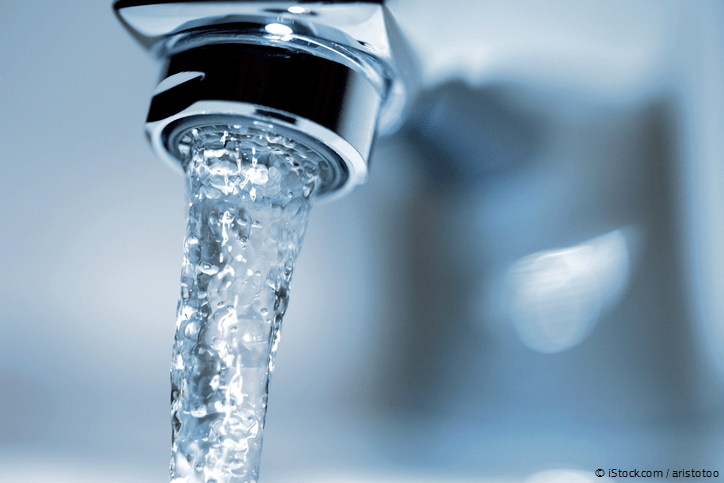
Water and waste management in mountainous and remote areas is a critical issue. Small villages and mountain shelters are often far from centralized services and infrastructure, making decentralized solutions essential. These solutions must account for accessibility challenges and environmental and climatic conditions, which affects resorces availability and systems functioning. In some areas, climate change and tourism increase place additional pressure on already fragile environments.
Solid waste must be collected and transported to treatment facilities requiring storage and transport capacity. Drinking water is often supplied in plastic bottles brought up from the valleys, or collected from rainfall and glaciers and then treated. Wastewater, usually requires local treatment, which can be difficult to implement, depending on its quality, space and resources availability.
Although technological innovation and stricter environmental regulations have advanced water and waste management in recent years, solutions often overlook the needs of small, decentralized communities. Mountain communities, however, have managed scarce resources for centuries.
This research aims to explore traditional practices, while exploring current approaches to these challenges. The goal is to identify synergies where tradition and innovation can converge, informing both new technologies and policy development for these areas. Nature-based solutions, such as constructed
wetlands or soil infiltration systems, will be investigated as sustainable, low-energy alternatives.
Combining traditional and modern practices in water and waste management can generate cultural value. By turning these practices into part of local heritage and tourist experiences, communities can raise awareness about the fragility of mountain environments, promoting more sustainable tourism and living.
This PhD position is part of the Cultural Heritage Outreach in RomAnce Languages (CHORAL) programme, a Horizon Europe Marie Skłodowska Curie programme co-funded by the European Union. This prestigious programme is linked to UNITA’s Cultural Heritage Hub, an international research network within the Alliance, which structures its research ecosystem facing cultural related challenges.
CHORAL aims to train high-quality international researchers and to nurture the development of interdisciplinary, international and inter-sectoral research that addresses any aspect of cultural heritage. While rooted in cultural heritage, the programme spans a wide range of scientific domains, including architecture, anthropology, arts and culture, computer science, history, literature, linguistics, management, and more.
Selected candidates will be enrolled in PhD programmes under joint supervision, awarding a double degree and requiring international mobility.
This offer is part of the MSCA-COFUND CHORAL programme, which will finance 14 positions out of 20 positions offered.
Requirements
On the deadline of the call, the candidate must be a doctoral candidate, i.e not already in possession of a doctoral degree, but in possession of a Master’s Degree enabling to do a PhD in Social Science, Arts, Architecture and Humanities applied to cultural heritage.
Any candidate in possession of the required diploma can apply regardless of the year of obtention of the diploma.
- MSc in Environmental Engineering, Environmental Science, Environmental Studies, Sustainability, Science, Ecology, environmental Architecture, Geosciences or related fields
- Ability to communicate, read and write in English
Researchers must not have resided or carried out their main activity (work, studies, etc.) in the country of the recruiting beneficiary for more than 12 months in the 3 years preceding the date of the call deadline. Compulsory national service, short stays such as holidays, and time spent as part of a procedure for obtaining refugee status under the Geneva Convention are not considered.
Applicants who are non-native speakers of English are required to provide proof of proficiency in the language, as CHORAL’s working language is English.
Benefits
The monthly gross salary will depend on the recruiting country. The following list presents an indicative gross salary after employers’ taxation, provided as guidance. The salary gross amount may be subject to changes corresponding to taxes increases/decreases.
- France: 2300€/month
- Italy: 2270€/month
- Spain: 2164€/month
- Romania: 2740€/month
The net salary amount may be subject to changes and corresponding personal tax position.
Organisation/Company – Università degli Studi di Brescia.
Field of research – Environmental science » Water science.
Research profile – First Stage Researcher (R1).
Country – Italy.
Application deadline – 17 Jan 2026 – 23:59 (Europe/Paris).
More information: Euraxess
Publicaciones relacionadas:
 PhD – Science and Technology for Advanced Therapies – Italy
 PhD – The Organization of Innovation for Sustainability Transition – Netherlands
 PhD – Position in artificial molecular machines – Marie Curie DN “MonaLisa”- Italy
 PhD – Student in the Laboratory of RNA Biology – ERA Chairs Group – Poland
 PhD – 2 PhD positions in Biorefinery and AgroBiotechnology – Belgium
Leave a Reply