
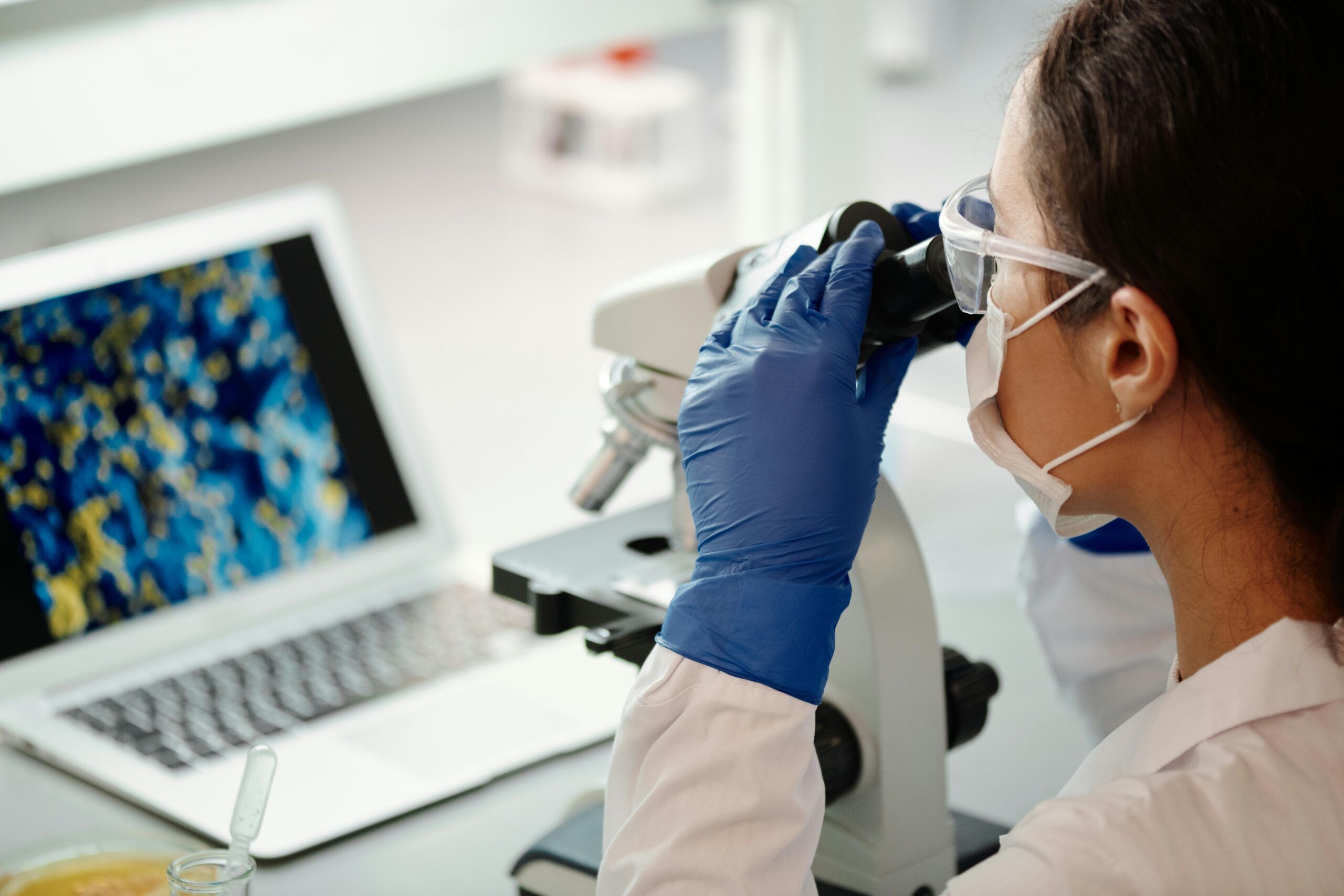
The University of Amsterdam is looking for a PhD candidate to study the molecular and cellular control of the barrier function of endothelial cells. Specifically, they want to study the dynamics of the cellular junctions and the connected cytoskeleton using super resolution microscopy.
You will be part of the team of Molecular Cytology at the Swammerdam Institute for Life Sciences in the Faculty of Science at the University of Amsterdam and have access to the van Leeuwenhoek Centre for Advanced Microscopy. The project is part of the Vascular Immunology Consortium, an ambitious interdisciplinary research initiative supported by the University of Amsterdam. This consortium bridges the Faculties of Life Sciences and Medicine, fostering a highly collaborative and integrative research environment. The overarching objective of the consortium is to elucidate the complex mechanisms by which the vascular system regulates the human immune response, with a particular focus on how vascular integrity and function are modulated under inflammatory conditions, including leukocyte extravasation and the biophysical stresses imposed by hypertension and blood flow.
The central aim for this project is to understand the molecular and cellular control of the barrier function of endothelial cells. In forming a monolayer, these cells partially overlap and form a tight barrier resisting sheer force and blood pressure. At the molecular scale, vascular endothelial (VE) cadherin and other proteins form a junctional protein complex (adherence junction), which tightly holds plasma membranes together of adjacent endothelial cells in a proximity of 20 nm. Intracellularly, these cell junctions are connected to the actin cytoskeleton via (α,β and p120) catenin. A variety of signalling cascades are connected to the regulation of the barrier integrity and cytoskeletal remodelling (including VEGFR and small GTPases).
This project focuses on the dynamics of the adherence junction and the connected cytoskeleton in relation to (local) pertubation by optogenetics, drugs and leukocyte transendothelial migration using super resolution microscopy. We will use a novel tau-STED microscope, which can achieve 50-70 nm optical resolution in live cells. By exploiting time-resolved information (ns timescale) resolution enhancement can be achieved at low STED laser light levels. We will use cultured endothelial (HUVEC) cells in well-controlled in vitro models compatible with tau-STED.
During your PhD research you will apply a variety of techniques, including (but not limited to) molecular biology (cloning), eukaryotic cell culture (culturing and isolating primary immune and endothelial cells, viral transduction methods), fluorescence imaging, optogenetics, superresolution microscopy/STED, and image analysis.
Duties:
- complete a PhD thesis within the official appointment duration of four years;
- use different molecular and cell biology based experimental approaches to visualize endothelial cells, cell junctions and the cytoskeleton with high resolution;
- generate and validate tools for superresolution imaging;
- perform your experiments in a systematic and well controlled manner and keep accurate records by properly documenting and organizing your work;
- discuss your work in our lab meetings, incorporate feedback and give input to others;
- assist in teaching and supervise BSc/MSc students during their research internship;
- participate in the Faculty of Science PhD training programme.
Requirements:
- a recent MSc degree in the life/biomedical sciences (or a related area in molecular, cell, chemical biology);
- experience with fluorescence microscopy;
- have demonstrated hands-on experience with one or more of the following techniques: DNA manipulation methods for generating constructs/plasmids, mammalian cell culture, live-cell imaging, optogenetics, image analysis;
- affinity with imaging techniques, data analysis, data visualization;
- a high intrinsic motivation and aptitude for fundamental research;
- fluent in English, both written and spoken.
Benefits:
They offer a temporary contract for 38 hours per week for the duration of 4 years (the initial contract will be for a period of 18 months and after satisfactory evaluation it will be extended for a total duration of 4 years). The preferred starting date is 1 November 2025 or sooner. This should lead to a dissertation (PhD thesis). They will draft an educational plan that includes attendance of courses and (international) meetings. They also expect you to assist in teaching undergraduates and master students.
Based on a full-time appointment (38 hours per week) the gross monthly salary will range from €2.901 in the first year to €3.707 (scale P) in the last year. This does not include 8% holiday allowance and 8,3% year-end allowance. The UFO profile PhD candidate applicable The Collective Labour Agreement of Universities of the Netherlands is applicable.
Besides the salary and a vibrant and challenging environment at Science Park we offer you multiple fringe benefits:
- 232 holiday hours per year (based on fulltime);
- multiple courses to follow from our Teaching and Learning Centre;
- a complete educational program for PhD students;
- a pension at ABP for which UvA pays two third part of the contribution;
- the possibility to follow courses to learn Dutch;
- help with housing for a studio or small apartment when you’re moving from abroad.
Organization/Company – University of Amsterdam (UvA)
Research field – Biological sciences » Biological engineering
Research profile – First Stage Researcher (R1)
Country –Netherlands
Application Deadline – 17 Aug 2025 – 21:59 (UTC)
More information: Euraxess
Publicaciones relacionadas:
 PhD – The Organization of Innovation for Sustainability Transition – Netherlands
 PhD – Student in the Laboratory of RNA Biology – ERA Chairs Group – Poland
 PhD – Position on the atmospheric dynamics of seasonal transitions – Netherlands
 PhD position in Evolutionary Biology in Estonia
 Postdoc Position in Cell Biology and Computational Microscopy Imaging in Sweden
Leave a Reply