
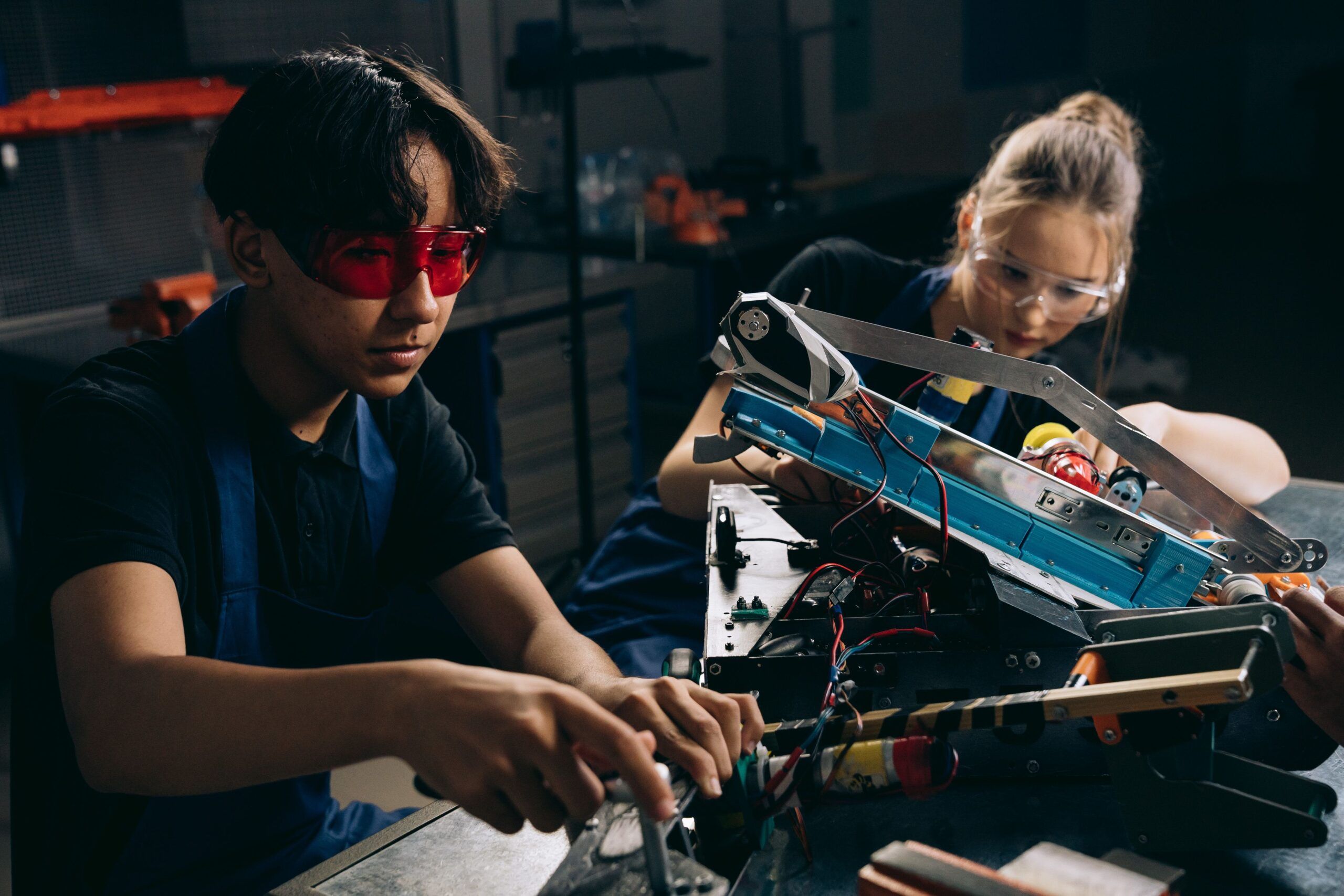
IAESTE (International Association for the Exchange of Students for Technical Experience) offers internships opportunities in various countries to enable students and recent graduates to gain international work experience and improve their employment prospects.
The placements cover a range of subject areas, particularly scientific, technological, engineering and business disciplines.
Who can apply for these placements?
People residing in a country where IAESTE is present are eligible to take part. You can check the association’s member countries.
Internship areas:
Opportunities cover, amongst others, the following disciplines:
- Computer science and information technology.
- Chemistry, materials science and chemical engineering.
- Mechanical, electrical and civil engineering.
- Geology and architecture.
- Mathematics, statistics and physics.
- Business, management and marketing.
How to apply:
- Find your work placements
- Register on the exchange platform.
- Contact your national office to let them know you have registered, along with the reference number for the placement you wish to apply for.
Available internships:
Here are some of the opportunities available:
1. Kenya – Computer Science and Mathematics: The successful candidate will work alongside academic staff and research teams on projects across various disciplines, defining analytical objectives and applying statistical methods and data science techniques.
Their main tasks will include:
-
- Carrying out exploratory analyses and preparing datasets, ensuring their quality and integrity.
- Applying statistical models and machine learning algorithms for prediction, classification and clustering tasks.
- Developing reproducible processes for data processing and analysis.
- Creating visualisations and dashboards to communicate results to technical and non-technical audiences.
- Document the analyses, code and results.
- Present the findings in a final report and/or an oral presentation to the department.
- Benefits:
- Duration: between 12 and 24 weeks.
- Working hours: 40 hours per week (8 hours per day), in the office.
- Gross salary: 15,000 KES per month.
- Accommodation: student hall of residence, at an estimated cost of 5,000 KES per month.
- Student requirements:
- Must have completed at least two years of study in IT, computer science, mathematics or statistics.
- Training related to data science.
- English language proficiency at C1–C2 level.
- Solid knowledge of probability, statistics, statistical inference, regression and data analysis.
- Ability to produce reports and give presentations.
Experience in machine learning, data visualisation and research projects related to data analysis will be an advantage.
Application deadline: 24 November 2026
2. Switzerland – Computer Science and Software/Hardware Engineering: CASCINATION AG is a medical technology company specialising in the development of computer-assisted and image-guided surgical solutions, including navigation systems and surgical robots.
The successful candidate will join the robotic software development team and will be involved in tasks such as:
-
- Setting up an integrated robotic simulation environment within the company’s development framework.
- Developing simulations of physical actuators and sensors.
- Contributing to the professional development of software for robotic systems.
- Becoming familiar with the medical sector and with software verification and validation processes.
- Benefits:
- Remuneration: CHF 2,300 gross per month, with an approximate 10 per cent deduction for social security (AHV/IV). The salary may be increased depending on educational qualifications and experience.
- Gain professional experience by participating in research and development projects involving robotic software applied to medical technology.
- Working hours: 42 hours per week, based on an 8-hour working day.
- Accommodation: estimated cost of 850 CHF per month.
- Cost of living: approximately 1,650 CHF per month, including accommodation.
- Student requirements:
- Must have completed at least three years of study in IT, computer science or software engineering.
- Minimum English level: B2.
- Practical experience in programming with C, preferably demonstrated through personal projects.
- Knowledge of algorithms, data structures and software design.
- Familiarity with Git and good programming practices, such as writing clean and tested code.
The ability to work independently, in an organised manner and with a focus on quality will be an advantage.
Application deadline: 27 November 2026
3. Switzerland – Agriculture and biology: These placements focus primarily on fieldwork and crop phenotyping, involving the assessment of plant characteristics and the collection of data using sensors and drones.
Depending on the project assigned, the successful candidate may be involved in:
- FIP – Field Phenotyping Platform: measurements to calibrate and validate sensors, including the LITERAL system, and regular data collection.
- PreDiMIX – Wheat variety mixtures: drone imaging campaigns on two experimental plots. Training in drone operation will be provided.
- PhenoMIX – Legume and cereal mixtures: field phenotyping and evaluation of species mixtures.
In addition, it will collaborate on joint activities such as the visual assessment of plots, plant sampling, harvesting, threshing and seed processing.
- Benefits:
- Gross salary: 2,400 CHF per month, with an approximate 10 per cent deduction for social security (AHV/IV).
- Working hours: 40 hours per week (8 hours per day).
- Duration: 34 weeks (fixed-term contract), from 1 February to 30 September 2027. No flexibility is indicated regarding the dates of the assignment.
- Accommodation: estimated cost of 850 CHF per month.
- Cost of living: approximately 1,650 CHF per month, including accommodation.
- Training in phenotyping techniques, physiological measurements and technologies applied to crop improvement.
- Use of field sensors, drone imagery and data quality control tools.
- Opportunity to carry out small-scale research projects using R or Python.
- Optional participation in a Master’s-level course on crop phenotyping, taught alongside ETH students from February to May.
- Student requirements
- Must have completed at least two years of study in agriculture, biology, agronomy, plant sciences, agricultural engineering, remote sensing or related disciplines.
- English or German language proficiency at B1–B2 level.
- An interest in crop science, plant phenotyping and detection technologies.
- Basic knowledge of R or Python would be an advantage.
- Willingness to carry out outdoor fieldwork, including repetitive measurements and activities in cold conditions.
- We are looking for a responsible, organised individual who is keen to learn new techniques.
- A driving licence would be an advantage. It is not essential, although please do mention it in your cover letter.
Application deadline: 27 November 2026
4. China – Engineering: Yantai Moon Environment Technology Co., Ltd. is an international company specialising in the manufacture of advanced equipment and integrated solutions for the industrial, commercial and public sectors. Its activities focus on environmental, low-carbon and energy-efficient technologies.
The successful candidate will assist with activities relating to the company’s international expansion, including:
-
- Taking part in the planning of international exhibitions and trade fairs.
- Providing technical advice on products and solutions, as well as support in resolving enquiries.
- Carrying out analyses of international markets.
- Helping to organise corporate events.
- Deliver training in English to improve the department’s oral communication skills.
- Benefits:
- Salary: 3,000 CNY per month.
- Working hours: 40 hours per week (8 hours per day), in-office.
- Accommodation: student hall of residence, at no estimated cost to the intern.
- Cost of living: approximately 1,500 CNY per month, including accommodation.
- Opportunity to join a company with a presence in markets across Europe, Asia, the Americas, the Middle East and Africa.
- Exposure to environmental and energy technologies, international markets and engineering projects.
- Development of business communication, organisational and coordination skills in an international environment.
- Student requirements
- Must have completed at least four years of study in mechanical engineering, energy engineering, industrial engineering, systems engineering or process engineering.
- Excellent command of English or Spanish (C1–C2).
- Experience of university life, such as involvement in student societies or scholarships.
- Communication skills in English and business communication.
- Organisational and coordination skills.
- Selection process and further information:
Applications will be reviewed on an ongoing basis, without waiting for the application deadline. The company plans to take on three interns per term, although places are limited.
The selection process consists of two stages:
- First interview with IAESTE China.
- Second interview with the employer.
We recommend that you submit your application as soon as possible, as applications are assessed on a first-come, first-served basis and places are limited.
Application deadline: 28 November 2026
More information: Eurodesk





Leave a Reply