
The Commission and the High Representative have presented last October 16 an international strategy for securing Europe’s place in global markets. The new EU global climate and energy vision presents the EU’s offer to the world: using diplomacy to protect our core interests, promoting standards for a fair transition by assisting our partners to develop theirs, and addressing the new security threats and challenges that endanger both European interests and those of our partners.
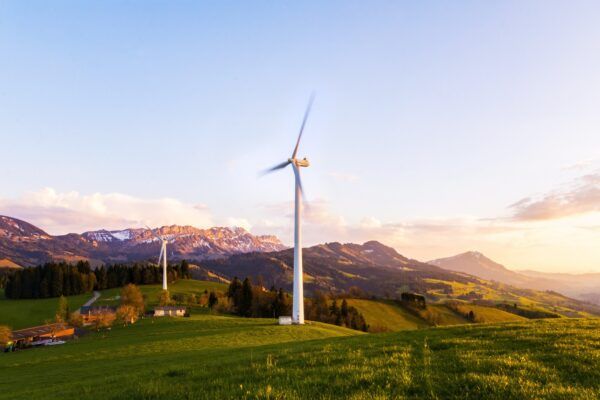
The EU is actively contributing to the ongoing clean industrial revolution across the world. The vision adds an external dimension to the Clean Industrial Deal and sets a new strategy to strengthen existing partnerships and forging new, mutually beneficial ones. To fully reap the benefits of the clean transition, the EU must be the industrial powerhouse supplying and providing clean tech and adaptation solutions to countries around the world, and create new business opportunities for its own clean tech industry.
As a market still dependent on fossil energy imports, renewables will remain at the heart of the EU’s clean transition. Almost half of EU electricity was generated by renewables in 2024. This significantly increases the EU’s energy independence and security. The EU has also seen an increase of 111% in the share of clean energy investments since 2015. The vision proposes to ramp up the EU’s clean technology manufacturing capacity to reach 15% of the global tech market, while improving its industrial competitiveness, in line with the Clean Industrial Deal.
The vision also reaffirms the EU’s commitment to a rules-based international order. The EU’s message to global partners is clear: we are working to fulfil the goals set out in the Paris Agreement; we are a reliable partner that plays by the rules; and we are open for business and cooperation.
The EU will continue fostering bilateral partnerships and multilateral alliances – existing and new ones – at international fora and at different levels, ranging from Free Trade Agreements, to Just Energy Transition Partnerships to Green Alliances. In addition, carbon pricing is crucial for achieving global climate goals, reducing emissions, promoting innovation, and ensuring a just and orderly transition away from fossil fuels. Major economies have recently adopted and expanded carbon pricing policies, which shows that it works. The EU is committed to its promotion through various initiatives, including supporting other countries in developing robust carbon pricing policies through a dedicated taskforce.
The EU will continue driving robust international climate policies. This includes stronger action to address the nexus between climate change, environmental degradation, and security and resilience by engaging at multilateral (UN and NATO) and bilateral levels. It will implement the actions set out in the 2023 Joint Communication on the Climate-Security Nexus and continue combatting information manipulation and disinformation on climate change.
Main actions
Last October 16’s EU global climate and energy vision presents a series of strategic actions for global energy and climate engagement to drive the clean transition, competitiveness and clean technologies and investments, including:
- Injecting political momentum: Encouraging multilateral and bilateral fora and initiatives to deliver on the Paris Agreement and Global Stocktake commitments.
- Boosting EU clean tech businesses internationally and enabling climate resilient investments: Organising business fora, setting up an EU external Clean Transition Business Council, scaling up investments and establishing business models for climate adaptation.
- Supporting and connecting European businesses with global investments: Making full use of the Global Gateway Investment Hub to assist joint investments projects outside the EU and the proposed Global Europe envelope to support EU business abroad and raise demand for EU technology.
- Expanding networks of mutually beneficial partnerships for global and resilient clean value chains, through free trade agreements, clean trade and investment partnerships and other instruments.
- Reforming global financial institutions for the clean and resilient transition and stepping up EU’s climate security work.
Background
In February 2025, the Commission presented the Clean Industrial Deal – a plan for EU competitiveness and decarbonisation within the EU. It included a new focus on energy-intensive industries that urgently need support to decarbonise, switch to clean energy, and tackle high costs, unfair global competition, and complex regulations. Similarly, it targeted the clean-tech sector which is at the heart of future competitiveness and necessary for industrial transformation, circularity, and decarbonisation. The Communication was followed in the summer by a series of more concrete elements, such as a new State Aid Framework and recommendations on tax incentives.
Today’s EU global climate and energy vision builds on the Clean Industrial Deal and extends some of its elements to the global clean transition and cooperation with partners worldwide.
The EU is staying the course to achieve climate neutrality by 2050 and is advancing in fulfilling the Paris Agreement. The EU has reduced its greenhouse gas emissions by 37% since 1990, accounting only for 6% of global emissions, and is with its Member States the biggest climate finance contributor in the world.
More information: European Commission
Publicaciones relacionadas:
 EU regions and cities collaborate with UNEP to accelerate multilevel action on climate and environment
 Europeans view climate action as a priority and support energy independence
 Commission to cut EU Taxonomy red tape for companies
 The Commission is launching a call for contributions to a specific review of European water legislation
 Protecting Europe’s Wildlife and Habitats with Natura 2000
Leave a Reply