
The Joint Parliamentary Scrutiny Group (JPSG) on Europol met in Warsaw today, bringing together Members of the European Parliament to discuss Europol’s work and the evolving security landscape.
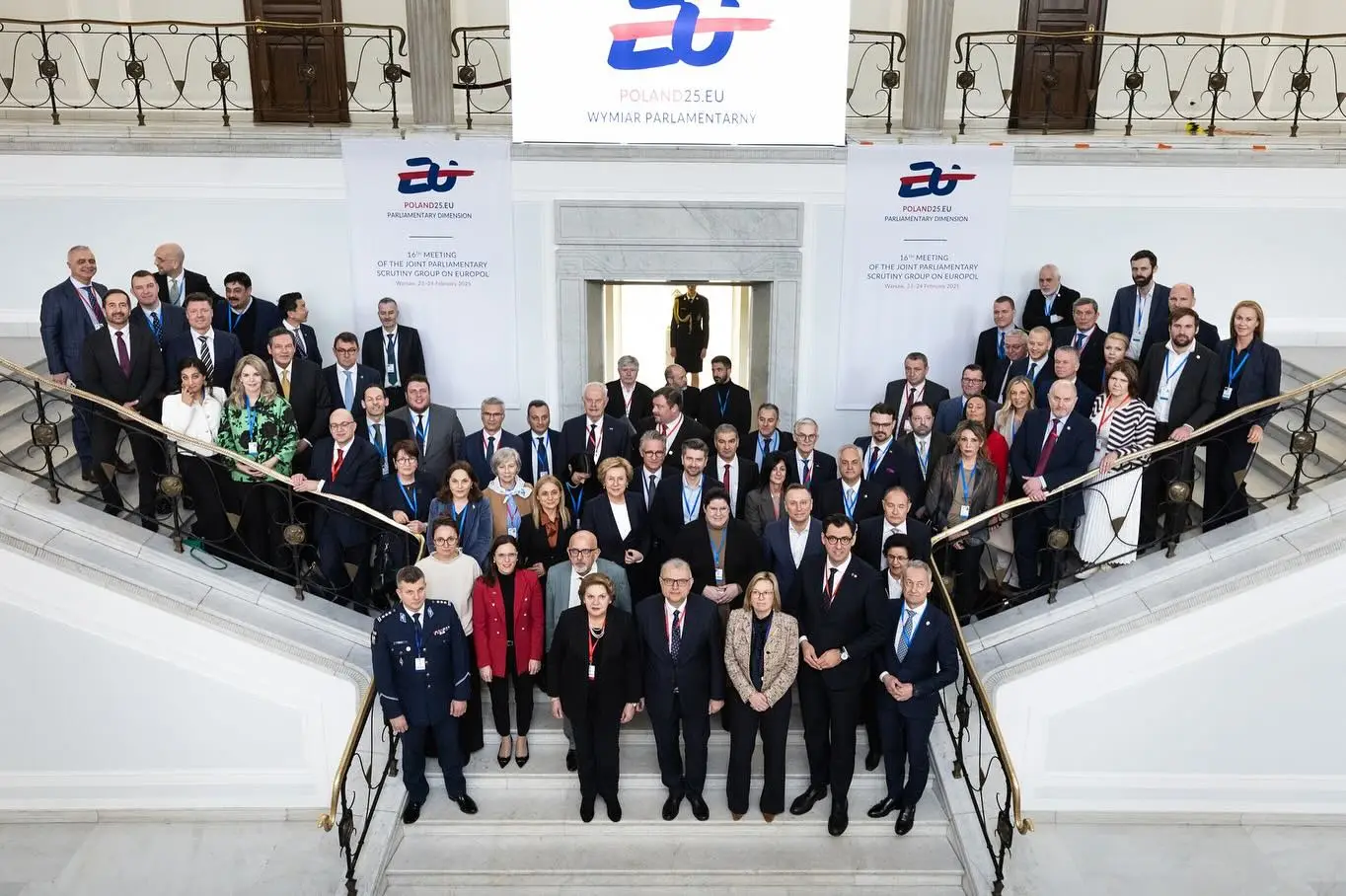
With serious and organised crime posing an increasing threat to communities across Europe, discussions focused on the Agency’s operational impact, strategic direction and future role in tackling criminal networks.
The meeting comes ahead of the EU Serious and Organised Crime Threat Assessment (EU SOCTA) 2025, scheduled for publication on 18 March. This report will outline the most pressing security threats facing the EU and shape law enforcement priorities for years to come.
Strengthening Europol’s operational and strategic direction
Addressing the JPSG, Europol’s Executive Director Catherine De Bolle provided updates on key developments, including the Multiannual Programming Document 2026-2028, which sets out Europol’s long-term objectives in the fight against organised crime, terrorism and emerging security threats.
Ms De Bolle highlighted Europol’s strengthened partnerships with law enforcement agencies worldwide, its enhanced technological capabilities and its ongoing efforts to dismantle criminal networks. She also reaffirmed the Agency’s commitment to supporting the enforcement of EU sanctions and tackling the criminal infiltration of legal businesses.
Operational impact: fighting crime across the EU
At the operational level, Europol is delivering results. Criminal networks remain the driving force behind many of the EU’s most serious threats. Intelligence gathered by the Agency shows that 86% of them exploit legal business structures to launder illicit profits. Europol is working closely with the private sector and national law enforcement to dismantle these networks and close financial loopholes.
Migrant smuggling remains a key focus, with a new expert network called DigiNex launched to tackle the increasing use of digital tools by smugglers. Counter-terrorism efforts also continue, with Europol leading the fight against terrorist content online.
A recent Referral Action Day targeted hate speech and incitement to violence, removing harmful content before it could spread further.
Looking ahead: Europol’s future mandate
As the EU prepares for the next phase of its internal security strategy, discussions have turned to the future of Europol’s mandate. The Agency’s operational demands have surged, and there is growing recognition that it must be equipped with the tools and resources to match. Strengthening Europol’s capabilities in financial crime, cybercrime and migrant smuggling will be crucial in the years ahead.
Concluding the JPSG meeting, Catherine de Bolle said: “The future of Europol lies in equipping the Agency with the necessary tools and resources to tackle the growing complexities of financial crime, cybercrime and migrant smuggling—critical areas for maintaining Europe’s safety.”
A recording of the JPSG meeting is available for viewing.
More information: Europol.
Publicaciones relacionadas:
 EUR 2.7 million seized in European operation against money laundering and cash smuggling
 Advances in security and criminal investigation: get to know the SIRIUS project
 Two Ukrainian brothers arrested on suspicion of leading a criminal gang
 An Individual Arrested In Spain For Spreading Terrorist Propaganda Online
 Returning Foreign Fighter Arrested in Spain
Leave a Reply