
For the first time ever, Europol has welcomed to its headquarters over 80 financial experts from all around the world to participate in Project A.S.S.E.T. (Asset Search & Seize Enforcement Taskforce), a unique initiative aimed at enhancing the number of criminal assets seized globally. In total, 43 law enforcement agencies from 28 countries joined the operation, as well as authorities from international organisations, including Eurojust and Interpol.
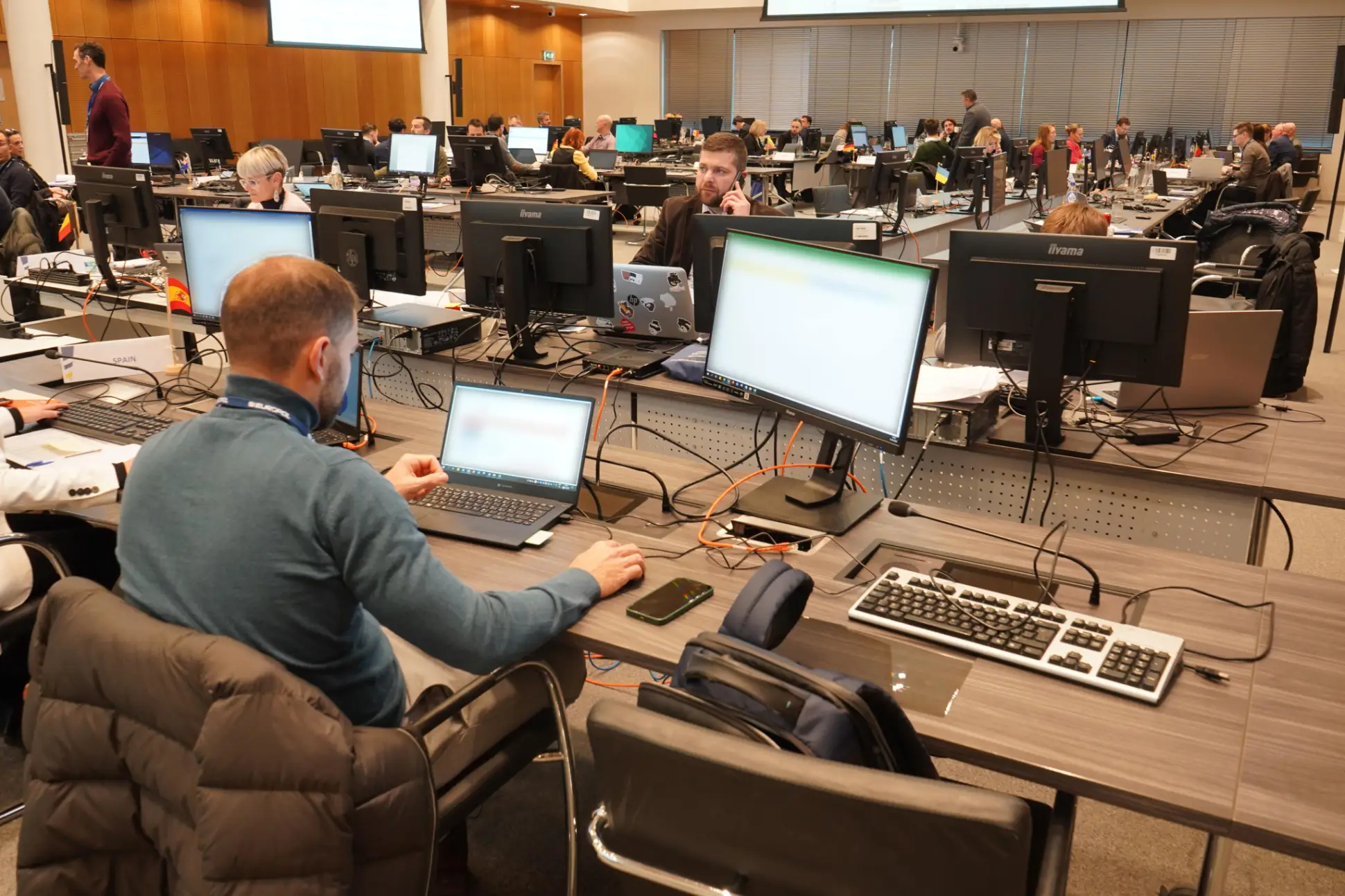
From 13 to 17 January, the specialists pooled their knowledge and expertise to establish a new organisational workstream to identify, freeze and seize criminal assets through all possible means available. This includes sharing expertise in identifying persons and new modi operandi surfacing in money laundering schemes, and planning joint actions to seize assets.
Throughout the operation, experts identified:
- 53 properties, 8 of which were valued EUR 38.5 million;
- Over 220 bank accounts, including one with a US $5.6 million balance;
- 15 companies, over 20 yachts and luxury vehicles, 4 of which were valued more than EUR 600,000;
- 83 cryptocurrency addresses and wallets.
Another key result of the operation was the freezing of EUR 200 000 in cryptocurrencies.
The initiative was organised by the European Financial and Economic Crime Centre (EFECC) and supported by Europol’s specialists and analysts in asset recovery, cryptocurrencies, open-source intelligence and innovation tools.
Burkhard Mühl
Head of the European Financial and Economic Crime Centre (EFECC)
This week, the Asset Search & Seize Enforcement Taskforce showcased Europol at its finest. Bringing together over 80 top experts from law enforcement and the private sector, we worked as one to trace, freeze, and seize the profits of organised crime. Together, we’re striking criminals where it hurts most – their wallets. As we move forward united, success is inevitable.
Objective: seizing criminal assets…
The seizure of criminally acquired assets is extremely low worldwide. It is estimated that law enforcement manages to take just a fragment of criminal assets out of criminals’ hands; below 2% of the estimated yearly proceeds of organised crime. The remaining 98% provides the fuel for the continuation and expansion of organised crime activities. The most threatening criminal networks in the EU use real estate as one of the main industries to launder their illicit –and untaxed– profits (41%).
Even though Project A.S.S.E.T. has taken place this week, law enforcement in all EU Member States and beyond are already setting up joint actions to increase the number of criminal assets recovered. Recent major operations Whitewall and Gorgon are good examples of this international law enforcement cooperation to increase seizures.
Based on the findings from these two investigations, Europol supported authorities from six countries in taking down underground bankers who were laundering the proceeds of large-scale drug trafficking and other serious crimes. One of the most successful outcomes of this operation was the seizure of EUR 27 million in cryptocurrencies alone.
…through joint action
Project A.S.S.E.T is a decisive step taken by EU Member States and third parties towards prioritising financial investigations, one of the areas which Europol is focusing on to successfully tackle top criminals.
In addition, the new Directive on Asset Recovery and Confiscation, which came into force in 2024, will become an important tool in the confiscation of these criminal assets. It gives new powers to the Asset Recovery Offices to efficiently freeze assets when required and to take immediate action to preserve the property until a freezing order has been issued.
The initiative exemplifies how Europol aims to strengthen the fight against all forms of serious international and organised crime by bringing relevant partners together. In this regard, a crucial element of Project A.S.S.E.T. is the participation of financial actors from the private sector, especially organisations from the banking sector and cryptocurrency exchanges.
The public-private partnership between Europol and the financial sector is a priority for the law enforcement agency: in December, Europol hosted a milestone plenary to address key issues in financial crime and intelligence, which concluded with the launch of a new workstream.
More information: Europol.
Publicaciones relacionadas:
 An Individual Arrested In Spain For Spreading Terrorist Propaganda Online
 Europol helps dismantle notorious hacker marketplace that sold your identity to criminals
 Terrorism in the EU in 2022 – facts and figures
 Counter terrorism: deal to share air passenger data in advance
 COVID-19 causes an upward trend in cybercrime
Leave a Reply