• Skip to primary navigation
  • Skip to main content
  • Skip to primary sidebar
  • Skip to footer
  • Bluesky
  • Facebook
  • Instagram
  • Twitter
  • YouTube
CDE Almería – Centro de Documentación Europea – Universidad de Almería

CDE Almería - Centro de Documentación Europea - Universidad de Almería

Centro de Documentación Europea de la Universidad de Almería

  • HOME
  • WHAT´S ON
    • EU NEWS
    • Activities
    • EU Calls and Awards
    • Radio Program «Europe with You»
  • DOCUMENTATION
    • EU Media Collection
      • Web Space
      • MEDIATHEQUE REPOSITORY
  • Europe on the net
    • Institutions
    • EU Representation in Spain
    • European information network of Andalusia
  • ABOUT US
    • Presentation
    • Services
    • People
    • Contact
  • Spanish
  • English

EU Member States agree to extend temporary protection for refugees from Ukraine

Inicio » EU News » Institutional Affairs » International Politics and Cooperation » EU Member States agree to extend temporary protection for refugees from Ukraine

3 de October de 2023

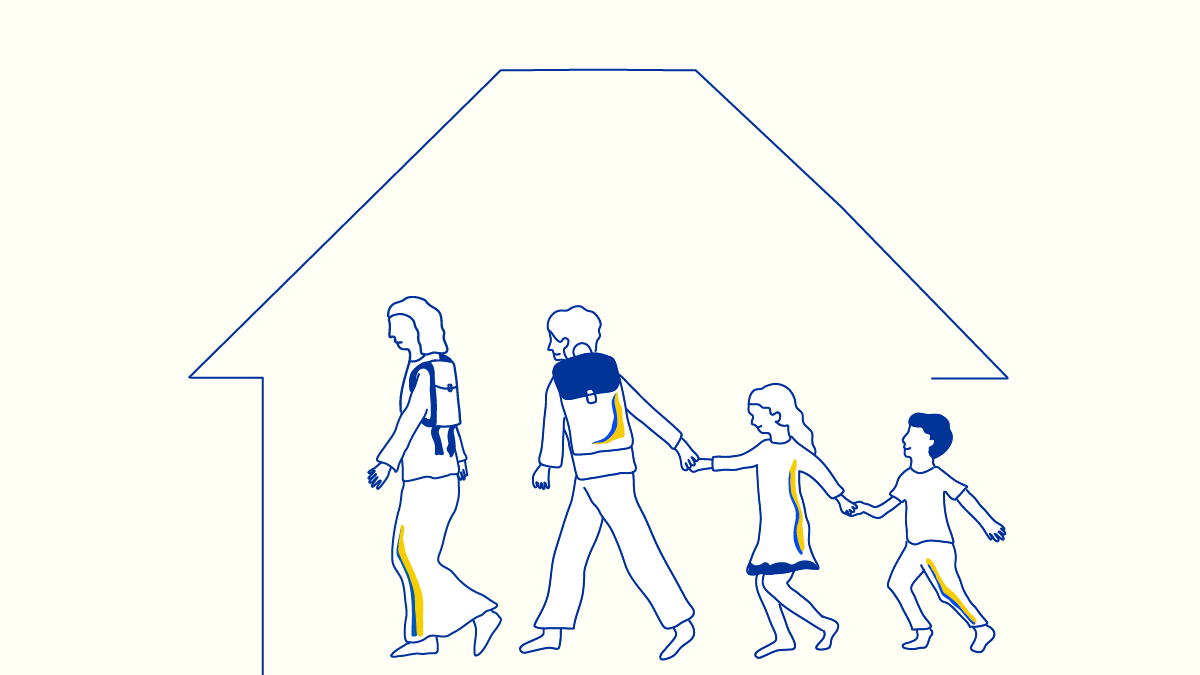
In order to provide certainty for more than 4 million Ukrainian refugees currently living in the EU, the Council agreed to extend the temporary protection for people fleeing from Russia’s war of aggression against Ukraine from 4 March 2024 to 4 March 2025.
The EU will support the Ukrainian people for as long as it takes. The prolongation of the protection status offers certainty to the more than 4 million refugees who have found a safe haven in the EU.

Fernando Grande-Marlaska Gómez, Spanish acting minister of the interior

The temporary protection mechanism was activated on 4 March 2022 – only a few days after Russian armed forces launched a large-scale invasion of Ukraine – and it was automatically extended by one year.

What is temporary protection?

The system provides immediate and collective (i.e. without the need for the examination of individual applications) protection to displaced persons who are not in a position to return to their country of origin.

The objective is to alleviate pressure on national asylum systems and to allow displaced persons to enjoy harmonised rights across the EU. These rights include:

  • residence
  • access to the labour market and housing
  • medical assistance
  • social welfare assistance
  • access to education for children

Background and next steps

Following this political agreement, the Council will have to formally adopt the decision to extend the temporary protection. This will happen once the legal scrubbing and translation in all EU languages has taken place.

Temporary protection is an EU emergency mechanism which is activated in exceptional circumstances of mass influx. The EU directive on temporary protection was adopted in 2001, in the aftermath of the large-scale displacement experienced in Europe due to the armed conflicts in the Western Balkans, in particular from Bosnia and Herzegovina and Kosovo.

Source: Press Release – European Council

Publicaciones relacionadas:

banderas ue ucraniaStatement by the members of the European Council after one year of Russia’s war of aggression against Ukraine cambio climáticoEU proposes comprehensive new on Climate-Security nexus EU condemns illegitimate “elections” in occupied territories of Ukraine Afghanistan: EU’s position and next steps Standing with Ukraine for as long as it takes



Defence & Security,  EU News,  Institutional Affairs,  International Politics and Cooperation,  International Safety and Defence Politics European Union,  help,  temporary protection,  ukraine,  Unión Europea,  war

“This is a space for debate. All comments, for or against publication, that are respectful and do not contain expressions that are discriminatory, defamatory or contrary to current legislation will be published”.

Reader Interactions

Leave a Reply Cancel reply

Your email address will not be published. Required fields are marked *

This site uses Akismet to reduce spam. Learn how your comment data is processed.

Primary Sidebar

Footer

  • CDE Almería
  • Biblioteca Nicolás Salmerón – Universidad de Almería
  • Planta: 1ª, Despacho: 1.05.0B.
  • Ctra. Sacramento s/n. Almería (Spain)
  • Teléfono: (+34) 950 015266

HOME
NEWS
DOCUMENTATION
EUROPE ON THE NET
ABOUT US

  • LEGAL NOTICE
  • PRIVACY POLICY
  • COOKIE POLICY
  • ACCESSIBILITY
  • SITEMAP

Copyright © 2026 CDE Almería · Creative Commons LicenseThis work is licensed under a Creative Commons Attribution-NonCommercial 4.0 International License.

<p>El Centro de Documentación Europea de la Universidad de Almería utiliza cookies propias y de terceros para facilitar al usuario la navegación en su página Web y el acceso a los distintos contenidos alojados en la misma. Asimismo, se utilizan cookies analíticas de terceros para medir la interacción de los usuarios con el sitio Web. Pinche el siguiente enlace si desea información sobre el uso de cookies y como deshabilitarlas. </p>

Politica de privacidad

El Centro de Documentación Europea de la Universidad de Almería utiliza cookies propias y de terceros para facilitar al usuario la navegación en su página Web y el acceso a los distintos contenidos alojados en la misma. Asimismo, se utilizan cookies analíticas de terceros para medir la interacción de los usuarios con el sitio Web. Pinche el siguiente enlace si desea información sobre el uso de cookies y como deshabilitarlas. <a href="/politica-de-cookies" rel="noopener" target="_blank">Más información</a>

Cookies estrictamente necesarias

Las cookies estrictamente necesarias tiene que activarse siempre para que podamos guardar tus preferencias de ajustes de cookies.

Básicamente la web no funcionara bien si no las activas.

Estas cookies son:

  • Comprobación de inicio de sesión.
  • Cookies de seguridad.
  • Aceptación/rechazo previo de cookies.
Cookies de terceros

Esta web utiliza Google Analytics, Google Tag Manager y Yandex Metrika para recopilar información anónima tal como el número de visitantes del sitio, o las páginas más populares.

Dejar estas cookies activas nos permite mejorar nuestra web.

Política de cookies

Pinche el siguiente enlace si desea información sobre el uso de cookies y como deshabilitarlas. Más información