• Skip to primary navigation
  • Skip to main content
  • Skip to primary sidebar
  • Skip to footer
  • Bluesky
  • Facebook
  • Instagram
  • Twitter
  • YouTube
CDE Almería – Centro de Documentación Europea – Universidad de Almería

CDE Almería - Centro de Documentación Europea - Universidad de Almería

Centro de Documentación Europea de la Universidad de Almería

  • HOME
  • WHAT´S ON
    • EU NEWS
    • Activities
    • EU Calls and Awards
    • Radio Program «Europe with You»
  • DOCUMENTATION
    • EU Media Collection
      • Web Space
      • MEDIATHEQUE REPOSITORY
  • Europe on the net
    • Institutions
    • EU Representation in Spain
    • European information network of Andalusia
  • ABOUT US
    • Presentation
    • Services
    • People
    • Contact
  • Spanish
  • English

EU guidance on how to address Europe’s socio-economic challenges in 2025

Inicio » Noticias UE » Asuntos Institucionales » State Members » EU guidance on how to address Europe’s socio-economic challenges in 2025

23 de December de 2024

The European Commission has published further policy guidance to support EU countries preserve macroeconomic stability while promoting growth and improving their competitiveness. This is essential in helping the EU to tackle next year’s socio-economic challenges. The latest guidance includes euro area policies, the Alert Mechanism Report and Joint Employment Report for 2025.
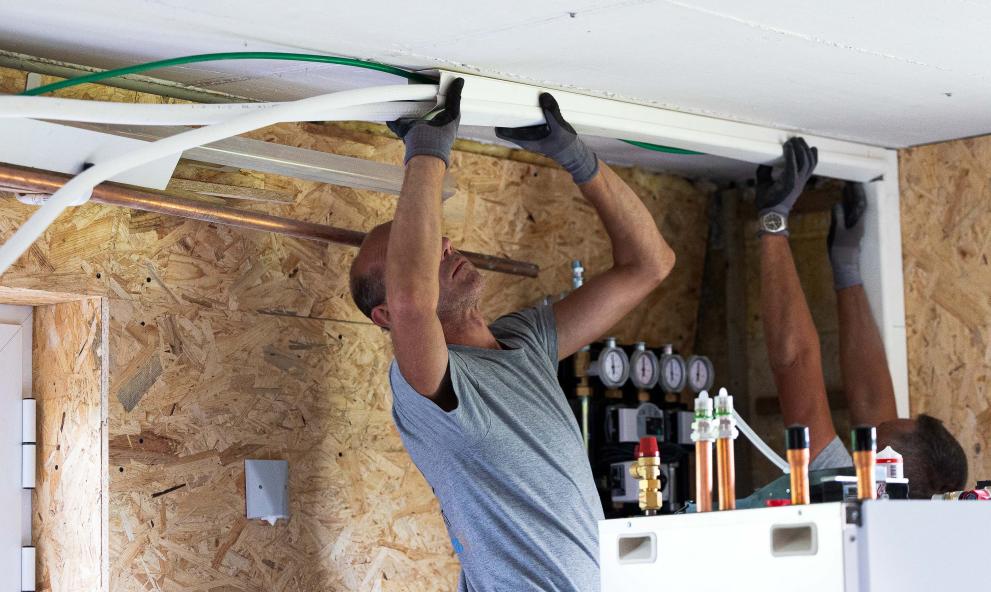
According to the Joint Employment Report proposal, the EU labour market remains relatively robust. The EU employment rate reached a record high of 75.3% in 2023 and rose further to 75.8% in the second quarter of 2024. At the same time, the unemployment rate decreased to a historic low of 6.1% in 2023, a trend that continued in 2024.

But challenges persist. Although real wages are recovering, they have not yet fully restored the purchasing power lost in previous years. Widespread labour and skills shortages also pose bottlenecks for productivity gains, innovation and competitiveness. The proposal recommends further promoting skills development across the EU as well as promoting quality jobs and an anti-poverty strategy in order to reach the 2030 targets in the European Pillar of Social Rights Action Plan.

The 2025 Alert Mechanism Report proposal identifies potential macroeconomic imbalances that could impact the economy of individual EU countries or the EU as a whole. In 2025, in-depth reviews will be prepared for the nine countries that were identified as experiencing imbalances or excessive imbalances in 2024: Cyprus, Germany, Greece, Italy, Hungary, the Netherlands, Romania, Slovakia and Sweden. An additional in-depth review will also be prepared for Estonia due to specific risks of newly emerging imbalances.

This year’s euro area recommendation calls on EU countries to act both individually, including through the implementation of their Recovery and Resilience Plans, and collectively within the Eurogroup to improve competitiveness and foster economic resilience.

The European Semester will continue to identify socio-economic challenges and provide guidance on the policy action needed to address them. In 2025, the European Semester Spring Package will provide country-specific recommendations to tackle main country-specific challenges identified in the Country Reports.

More information: European Commission.

Publicaciones relacionadas:

State aid: Commission to further facilitate implementation of aid measures promoting the green and digital transition European Commission sends letter of formal notice to the United Kingdom for breach of its obligations Agreement between the European Parliament and EU Member States on Europe’s next long-term budget and NextGenerationEU New Erasmus+ programme in the European Union European Commission’s May infringement proceedings package against Spain


EU News,  Institutional Affairs,  State Members challeges,  Economy,  European Commission,  guidance,  mermbers

“This is a space for debate. All comments, for or against publication, that are respectful and do not contain expressions that are discriminatory, defamatory or contrary to current legislation will be published”.

Reader Interactions

Leave a Reply Cancel reply

Your email address will not be published. Required fields are marked *

This site uses Akismet to reduce spam. Learn how your comment data is processed.

Primary Sidebar

Footer

  • CDE Almería
  • Biblioteca Nicolás Salmerón – Universidad de Almería
  • Planta: 1ª, Despacho: 1.05.0B.
  • Ctra. Sacramento s/n. Almería (Spain)
  • Teléfono: (+34) 950 015266

HOME
NEWS
DOCUMENTATION
EUROPE ON THE NET
ABOUT US

  • LEGAL NOTICE
  • PRIVACY POLICY
  • COOKIE POLICY
  • ACCESSIBILITY
  • SITEMAP

Copyright © 2026 CDE Almería · Creative Commons LicenseThis work is licensed under a Creative Commons Attribution-NonCommercial 4.0 International License.

<p>El Centro de Documentación Europea de la Universidad de Almería utiliza cookies propias y de terceros para facilitar al usuario la navegación en su página Web y el acceso a los distintos contenidos alojados en la misma. Asimismo, se utilizan cookies analíticas de terceros para medir la interacción de los usuarios con el sitio Web. Pinche el siguiente enlace si desea información sobre el uso de cookies y como deshabilitarlas. </p>

Politica de privacidad

El Centro de Documentación Europea de la Universidad de Almería utiliza cookies propias y de terceros para facilitar al usuario la navegación en su página Web y el acceso a los distintos contenidos alojados en la misma. Asimismo, se utilizan cookies analíticas de terceros para medir la interacción de los usuarios con el sitio Web. Pinche el siguiente enlace si desea información sobre el uso de cookies y como deshabilitarlas. <a href="/politica-de-cookies" rel="noopener" target="_blank">Más información</a>

Cookies estrictamente necesarias

Las cookies estrictamente necesarias tiene que activarse siempre para que podamos guardar tus preferencias de ajustes de cookies.

Básicamente la web no funcionara bien si no las activas.

Estas cookies son:

  • Comprobación de inicio de sesión.
  • Cookies de seguridad.
  • Aceptación/rechazo previo de cookies.
Cookies de terceros

Esta web utiliza Google Analytics, Google Tag Manager y Yandex Metrika para recopilar información anónima tal como el número de visitantes del sitio, o las páginas más populares.

Dejar estas cookies activas nos permite mejorar nuestra web.

Política de cookies

Pinche el siguiente enlace si desea información sobre el uso de cookies y como deshabilitarlas. Más información