• Skip to primary navigation
  • Skip to main content
  • Skip to primary sidebar
  • Skip to footer
  • Bluesky
  • Facebook
  • Instagram
  • Twitter
  • YouTube
CDE Almería – Centro de Documentación Europea – Universidad de Almería

CDE Almería - Centro de Documentación Europea - Universidad de Almería

Centro de Documentación Europea de la Universidad de Almería

  • HOME
  • WHAT´S ON
    • EU NEWS
    • Activities
    • EU Calls and Awards
    • Radio Program «Europe with You»
  • DOCUMENTATION
    • EU Media Collection
      • Web Space
      • MEDIATHEQUE REPOSITORY
  • Europe on the net
    • Institutions
    • EU Representation in Spain
    • European information network of Andalusia
  • ABOUT US
    • Presentation
    • Services
    • People
    • Contact
  • Spanish
  • English

EU boosts funding to protect aid workers with €4.35 million

Inicio » EU News » Social Affairs » Labour Market and Employment » EU boosts funding to protect aid workers with €4.35 million

19 de December de 2025

The European Union is significantly reinforcing its efforts to protect humanitarian personnel operating in high-danger zones by allocating an additional €4.35 million to the ‘Protect Aid Workers’ initiative.
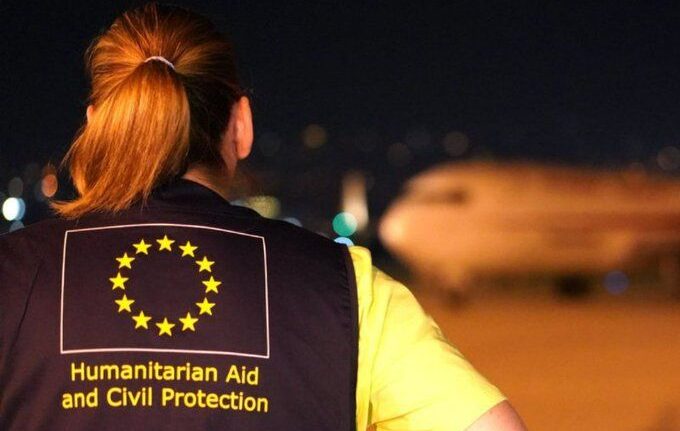
Nagorno-Karabakh

The decision comes at a time when the work of humanitarian personnel is becoming more and more dangerous. This new funding will support humanitarian staff who experience critical incidents in the line of duty, ensuring their safety and recovery. The primary focus will be on local humanitarian workers as they are more exposed to armed violence and threats to their lives.

The announcement comes as the Commissioner for Preparedness, Crisis Management, and Equality, Hadja Lahbib, is hosting a side event to the Sakharov Prize ceremony to meet with the nominees for the prize, Palestinian Red Crescent Society and UNRWA, but also humanitarian workers from Afghanistan, Ukraine and Sudan who have benefitted from the Protect Aid Workers programme.

2024 was the deadliest year for humanitarian workers to date, with 385 aid workers killed on duty. For 2025, the figure stands at 326. Every day, thousands of humanitarian workers risk their lives helping people in conflict and disaster zones.

EU-funded Protect Aid Workers includes the allocation of grants to humanitarian organisations, to cover the cost of protection measures and post-incident support for staff. These grants also include legal fees to support aid workers who are threatened or have been threatened with arrest and detention. Since the launch of the Protect Aid Workers programme, the EU has supported more than 450* aid workers and their families.

The EU will continue to defend the normative framework for protecting aid workers and facilitate every year a dedicated resolution of the UN General Assembly on the safety and security of UN and humanitarian workers. This year’s resolution on the “Safety and security of humanitarian personnel and protection of United Nations personnel”, was adopted on 10 December with a large majority. It follows the Political Declaration for the Protection of Humanitarian Personnel, launched by Australia in the margin of UNGA in September 2025, and signed by Commissioner Lahbib on behalf of the EU 27.

For more information: European Commission

Publicaciones relacionadas:

Commission continues talks on telework fairness and right to disconnect Commission sets out roadmap for future-proof quality jobs in a competitive EU More than 6.1 million workers trained under the Pact for Skills 2025 ESDE report highlights the importance of underrepresented groups MEPs seek to improve trainees’ working conditions across the EU



EU News,  Labour Market and Employment,  Social Affairs aid workers,  European Commission,  European Union,  humanitarian personnel,  News,  preparedness,  protection,  safety,  Security,  support

“This is a space for debate. All comments, for or against publication, that are respectful and do not contain expressions that are discriminatory, defamatory or contrary to current legislation will be published”.

Reader Interactions

Leave a Reply Cancel reply

Your email address will not be published. Required fields are marked *

This site uses Akismet to reduce spam. Learn how your comment data is processed.

Primary Sidebar

Footer

  • CDE Almería
  • Biblioteca Nicolás Salmerón – Universidad de Almería
  • Planta: 1ª, Despacho: 1.05.0B.
  • Ctra. Sacramento s/n. Almería (Spain)
  • Teléfono: (+34) 950 015266

HOME
NEWS
DOCUMENTATION
EUROPE ON THE NET
ABOUT US

  • LEGAL NOTICE
  • PRIVACY POLICY
  • COOKIE POLICY
  • ACCESSIBILITY
  • SITEMAP

Copyright © 2026 CDE Almería · Creative Commons LicenseThis work is licensed under a Creative Commons Attribution-NonCommercial 4.0 International License.

<p>El Centro de Documentación Europea de la Universidad de Almería utiliza cookies propias y de terceros para facilitar al usuario la navegación en su página Web y el acceso a los distintos contenidos alojados en la misma. Asimismo, se utilizan cookies analíticas de terceros para medir la interacción de los usuarios con el sitio Web. Pinche el siguiente enlace si desea información sobre el uso de cookies y como deshabilitarlas. </p>

Politica de privacidad

El Centro de Documentación Europea de la Universidad de Almería utiliza cookies propias y de terceros para facilitar al usuario la navegación en su página Web y el acceso a los distintos contenidos alojados en la misma. Asimismo, se utilizan cookies analíticas de terceros para medir la interacción de los usuarios con el sitio Web. Pinche el siguiente enlace si desea información sobre el uso de cookies y como deshabilitarlas. <a href="/politica-de-cookies" rel="noopener" target="_blank">Más información</a>

Cookies estrictamente necesarias

Las cookies estrictamente necesarias tiene que activarse siempre para que podamos guardar tus preferencias de ajustes de cookies.

Básicamente la web no funcionara bien si no las activas.

Estas cookies son:

  • Comprobación de inicio de sesión.
  • Cookies de seguridad.
  • Aceptación/rechazo previo de cookies.
Cookies de terceros

Esta web utiliza Google Analytics, Google Tag Manager y Yandex Metrika para recopilar información anónima tal como el número de visitantes del sitio, o las páginas más populares.

Dejar estas cookies activas nos permite mejorar nuestra web.

Política de cookies

Pinche el siguiente enlace si desea información sobre el uso de cookies y como deshabilitarlas. Más información