
The Council today agreed its position on the legal framework for implementing the European Council’s agreement to grant Ukraine a loan of €90 billion for the years 2026-2027. The Council now aims to reach an agreement with the European Parliament quickly so that the first payment can be disbursed at the beginning of the second quarter of this year.
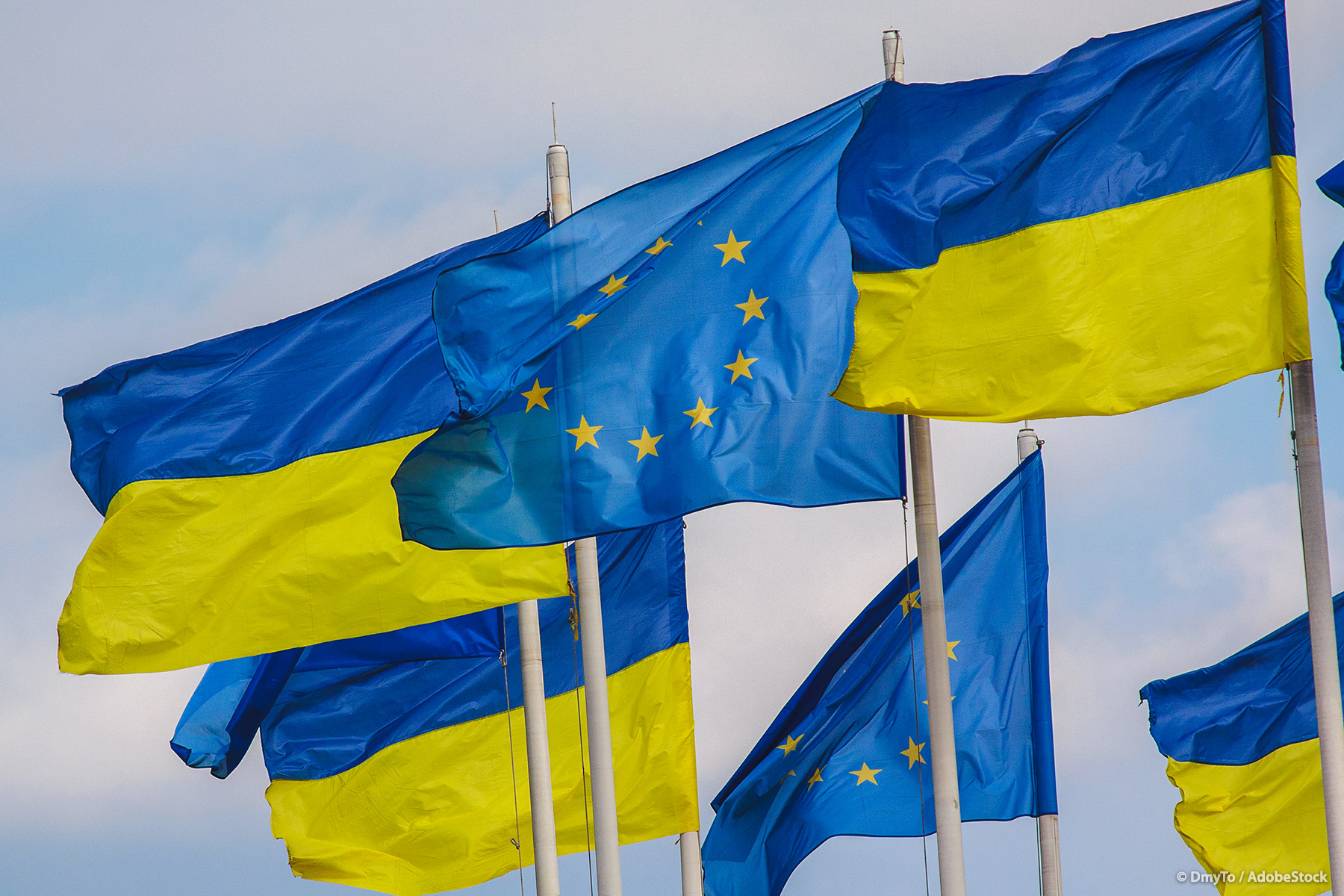
The aid loan to Ukraine will enable the country to meet its pressing financing needs as Russia continues its war of aggression. To this end, it will specifically aim to finance Ukraine’s general budget and defence needs.
Today’s agreement demonstrates that the EU remains firmly committed to supporting Ukraine and its people. The new financing will help to ensure the country’s fierce resistance to Russian aggression. At the same time, we are sending a clear signal that the sovereignty and territorial integrity of states must be fully respected, in accordance with international law. I hope that we will soon be able to finalise, together with the European Parliament, the legal texts that will allow these loans to be disbursed.
Makis Keravnos, Minister of Finance of the Republic of Cyprus.
As also agreed by the European Council, the aid will be financed through EU loans raised on the capital markets with the backing of the EU budget. Repayment of the loan will only be due once Russia has paid war reparations to Ukraine. In addition, the funding will help to strengthen the European and Ukrainian defence industries.
Today’s decision was taken under the enhanced cooperation procedure, with the participation of 24 Member States.
Financing instruments
Under the proposed framework, the EU will make funding available to Ukraine in two ways:
- €30 billion in macroeconomic assistance will be provided to Ukraine, channelled through macro-financial assistance (MFA) or implemented through the Ukraine Facility, the EU’s dedicated instrument for providing Ukraine with stable and predictable financial support;
- €60 billion will be used to support Ukraine’s investment in defence industrial capabilities and the procurement of military equipment. The funding will give Ukraine crucial and timely access to defence products from both Ukrainian and EU industry.
The financial and economic assistance available under the loans will be made available to Ukraine in line with its financing needs, which will be determined in a financing strategy to be developed by Ukraine itself. The strategy will be approved by the Council following an assessment by the Commission.
In any case, the funding will be linked to strict conditions for Ukraine, such as adherence to the rule of law, including the fight against corruption.
Procurement in the military and defence sector
In principle, defence products should only be procured from companies in the EU, Ukraine or the EEA EFTA countries. Where Ukraine’s military needs require the urgent delivery of a defence product that is not available in the EU, Ukraine or an EEA EFTA country, a set of specific exceptions would apply.
Furthermore, the Council mandate stipulates that third countries other than Ukraine or EFTA EEA countries may be directly associated with the loan of assistance to Ukraine in relation to specific defence products. In this regard, the mandate distinguishes between two categories of third countries:
- countries that have concluded a bilateral agreement with the Union under the SAFE Instrument Regulation, the EU’s financial tool to help Member States invest in defence. The association would have to be established in a delegated act for each third country, also detailing the products that could be purchased from that country’s industry;
- countries that have concluded a security and defence partnership with the EU, which have committed to making a fair and proportionate financial contribution to the costs of the loans and which are providing Ukraine with significant financial and military support. The partnership would have to be established in a Council implementing act, which would also detail the products that could be purchased from that country’s industry.
Debt servicing costs
In order to ensure the most favourable loan conditions and manage Ukraine’s debt sustainability, it is envisaged that the interest cost of the loan will be covered by the EU budget.
This will not affect the budget contributions of the Czech Republic, Hungary and Slovakia, which have decided not to participate in enhanced cooperation.
Next steps
The Council will now seek to reach a rapid agreement with the Parliament on the final legal texts of the Regulation implementing the aid loan and the Regulation amending the Facility for Ukraine.
The Council is also expected to request, by written procedure, the European Parliament’s approval of an amendment to the current Multiannual Financial Framework (MFF) Regulation in order to secure financial assistance from the EU budget.
Once all the steps have been completed, the Commission will be able to disburse the first payment at the beginning of the second quarter of this year.
Context
According to preliminary IMF estimates, Ukraine’s total estimated remaining financing needs for the period 2026-2027 amount to €135.7 billion, assuming that Russia’s war of aggression ends in 2026.
The European Council of December 2025 agreed that the EU would contribute €90 billion in 2026 and 2027 — representing two-thirds of Ukraine’s financing needs — which would also cover macro-financial needs, in order to support investment in its industrial defence capabilities and acquire the necessary military equipment. Other countries, in particular G7 partners, are expected to cover the remaining financing needs. The European Council also mandated that the loan would only be repayable once Russia had paid war reparations to Ukraine.
Since the start of Russia’s military aggression, the EU and its Member States have provided Ukraine with €193.3 billion in assistance. The EU is determined to continue providing political, financial, economic, humanitarian, military and diplomatic support to Ukraine and its people.
More information: European Council.
Publicaciones relacionadas:
 19th package of sanctions against Russia: EU targets Russian energy, third-country banks and crypto providers
 Extraordinary European Council meeting: discussion on further assistance to Ukraine
 EU Strategy for Cooperation in the Indo-Pacific: Council approves conclusions
 Co-Chairs Conclusions on Strengthening Cross-Regional Security and Connectivity
 Council greenlights Switzerland’s association to EU programmes
Leave a Reply