
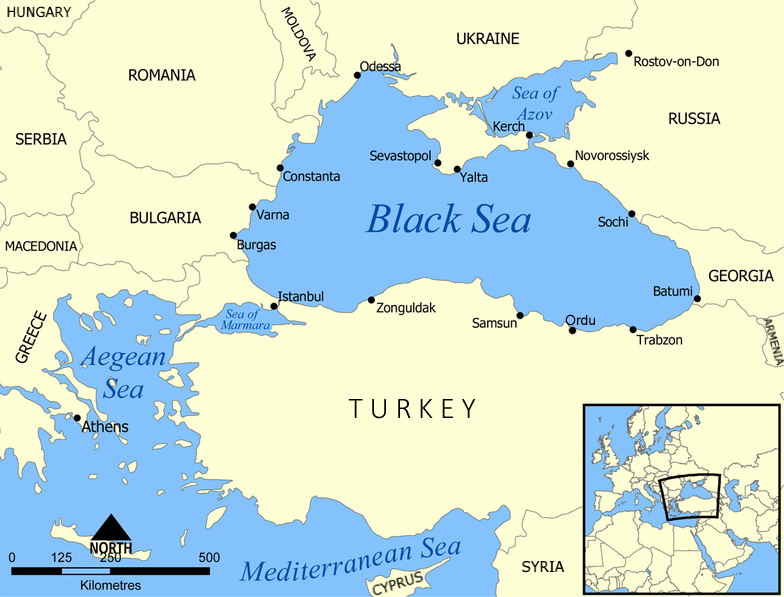
Today the High Representative for Foreign Affairs and Security Policy/Vice-President of the European Commission, Kaja Kallas, Commissioner for Enlargement, Marta Kos, and Commissioner for International Partnerships, Jozef Síkela, met with representatives from EU Member States, Armenia, Azerbaijan, Kazakhstan, Kyrgyzstan, the Republic of Moldova, Tajikistan, Türkiye, Turkmenistan, Ukraine and Uzbekistan in Luxembourg for the Ministerial Meeting on Cross-Regional Security and Connectivity. The meeting featured two distinct discussions: the first focused on security, stability, and resilience in the Black Sea region, and the second, joined by Central Asian countries, concentrated on the cross-regional Connectivity Agenda. During these sessions, participants discussed opportunities to enhance linkages and cooperation between the different regions. In a challenging geopolitical context, participants highlighted their determination to deepen cooperation in areas of common interest, enhance mutual resilience and promote more connected, secure and prosperous regions.
Security and Stability and Resilience in the Black Sea region
- The Black Sea is an area of significant geostrategic importance, bridging Europe to Asia and playing a strategic role for international trade, strategic transit of grains, energy and critical raw materials and for global security.
- Together with EU Member States and Armenia, Azerbaijan, the Republic of Moldova, Türkiye and Ukraine, the Ministerial session on Black Sea security noted the essential importance of regional cooperation for enhancing security, peace and regional stability.
- Participants discussed proposals to deepen cooperation towards enhanced maritime security in the Black Sea, including the proposal of a dedicated Black Sea Maritime Security Hub. The EU is ready to support Member States and partners’ efforts to build up capacities for observation and monitoring, protection of critical infrastructure and countering hybrid threats.
- Initiatives for broadening coast-guard cooperation in the region, supporting demining initiatives and addressing risks related to shadow fleet were also proposed, building on lessons learned in the Mediterranean and the Baltic Seas. These efforts should be seen as part of EU contributions to the security of Ukraine.
- Co-Chairs called EU Member States and partner countries to engage actively in common areas of cooperation related to Black Sea security.
Advancing a cross-regional Connectivity Agenda
- The initiative aims at coordinating strategic investments to boost trade, and socio-economic development through resilient and efficient transport, energy, and digital connections linking Central Asia to the Southern Caucasus and onwards to the European Union – with sustainability and the green transition at its core.
- In the area of transport, the discussion focused on strengthening the Trans-Caspian Transport Corridor and opening a dialogue to bolster and extend transport connections between the EU, Black Sea countries, Türkiye, the South Caucasus and Central Asia.
- In the area of digital connectivity, the Agenda will seek expanding high-speed internet access to enhance digital connectivity, trade, innovation, and secure critical infrastructure.
- In the area of energy, advancing renewable energy links will fortify energy security through diversification and accelerate the deployment of green energy resources.
- Cooperation on regional trade facilitation will allow harmonising, simplifying and digitalising customs procedures to ease cross-border trade, attract private sector financing and enhance market integration.
Next steps for implementation
- This meeting has prepared the groundwork for a coordinated, step-by-step approach to achieving sustainable progress in cross-regional cooperation and connectivity for a more secure and prosperous shared future.
- To advance the Connectivity Agenda, we recognised a need for an effective coordination framework – anchored in shared priorities and collaborative engagement – to ensure coherence of actions and tangible, sustainable outcomes across regions.
- The EU stands ready to support Member States and partners’ efforts in this regard, to work towards a proposal of such a cooperation framework aiming to advance the implementation of the Connectivity Agenda among participating countries, International Financial Institutions, private investors, like-minded partners, building on existing platforms. This proposal would be presented for discussion and further development at the Trans-Caspian Transport Corridor Investors and Connectivity Forum in Tashkent on 27 November 2025. It will be accompanied by a mapping of existing expertise and analysis of connectivity needs to inform discussions on priority investments and soft connectivity measures.
The participants decided to reconvene again in a year’s time.
More information: European Council
Publicaciones relacionadas:
 EU Strategy for Cooperation in the Indo-Pacific: Council approves conclusions
 19th package of sanctions against Russia: EU targets Russian energy, third-country banks and crypto providers
 The EU and South Korea are strengthening their trade and technological cooperation
 EU and US take stock of trade and technology cooperation
 EU and Ukraine reach agreement in principle on a modernised trade relationship
Leave a Reply