
The European Union’s agri-food sector recorded another record year in 2025, consolidating its global leadership in agricultural trade. The trade surplus was approximately four times higher than in 2002, and the EU remains a net exporter in most agri-food categories. Furthermore, the sector contributed 37% of the EU’s total trade surplus in 2025, underlining its importance to the European economy.
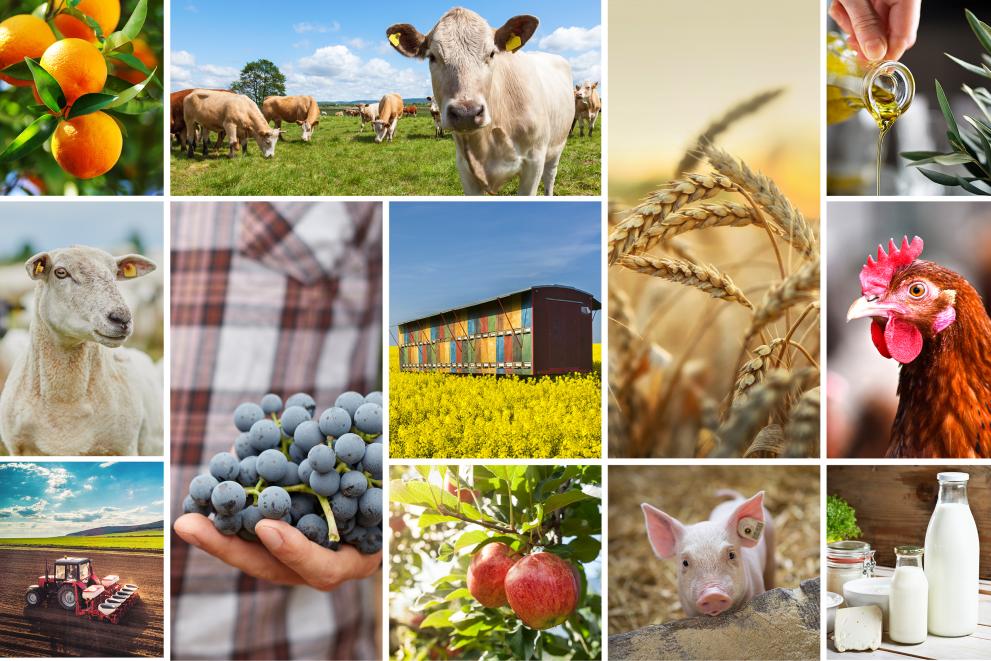
Exports reach an all-time high.
Agri-food exports reached €238.4 billion in 2025, representing a 1% increase compared to 2024 (€2.8 billion). The EU maintained its position as the world’s largest agri-food exporter. Furthermore, it stands out as the only exporter among the world’s top five (EU, US, Brazil, China and Canada) to have recorded growth in the total value of its exports during the year. This demonstrates the resilience of EU agri-food exports despite the volatility of the trade environment.
Exports remained strong throughout the year, exceeding 2024 levels in all months except August and November. Overall, export prices remain high, peaking in early 2025 before gradually declining. On average, export prices remained stable year-on-year.
The United Kingdom remains the main destination for EU agri-food products. By contrast, exports to the United States and China declined. Overall, however, the EU maintained a well-diversified portfolio of export markets worldwide.
Product diversification remains a strength: EU agri-food exports continued to be spread across a wide range of product categories in all classes. Cereals, dairy products and wine led the export basket. Rising global prices significantly boosted the value of exports of cocoa, coffee, chocolate and dairy products. Conversely, the value of olive oil exports fell due to lower prices, whilst export volumes of wine and cereals also declined.
Agri-food exports accounted for 9% of total EU exports in 2025 (€2.6 trillion), underlining the sector’s strategic economic importance.
Higher prices increase the total value of imports.
EU agri-food imports also grew, reaching a record €188.6 billion, an increase of 9% (€16.2 billion) compared to 2024. This growth was mainly due to rising import prices, which increased by an average of 10% over the year. Agri-food imports accounted for 7.5% of total EU imports in 2025 (€2.5 trillion).
Coffee, tea, cocoa and spices remained the EU’s most imported product category in 2025 and drove most of the increase in EU imports, as cocoa and coffee prices reached record levels. Prices for imported fruit and nuts also rose. Conversely, import prices for oilseeds and protein crops fell, as did the volumes of cereals imported. The origin of EU imports remained well diversified in 2025. Imports from sub-Saharan Africa, Canada, Vietnam and the United States increased, whilst those from Ukraine decreased.
The surplus is shrinking, but remains substantial.
The stronger growth in imports led to a contraction in the EU’s agri-food trade surplus, which fell to €49.9 billion, some €13.3 billion less than in 2024. It should be noted that the EU continues to record surpluses in most products.
Trade with free trade agreement partners remained key to performance. In 2025, 61% of the EU’s agri-food exports and 57% of imports were with free trade agreement partners, demonstrating the essential nature and growing importance of these agreements. This highlights the significance of two decades of expanding agreements and faster average trade growth with these countries.
More information: European Commission.
Publicaciones relacionadas:
 EU exports under Free Trade Agreements surpass €1 trillion
 The EU is studying the investment needed to improve trade routes between Europe and Central Asia via the Caucasus.
 New import surveillance tool to help EU prevent harmful trade diversion
 EU introduces customs duties on low-value e-commerce packages
 EU and India conclude landmark Free Trade Agreement
Leave a Reply