• Skip to primary navigation
  • Skip to main content
  • Skip to primary sidebar
  • Skip to footer
  • Bluesky
  • Facebook
  • Instagram
  • Twitter
  • YouTube
CDE Almería – Centro de Documentación Europea – Universidad de Almería

CDE Almería - Centro de Documentación Europea - Universidad de Almería

Centro de Documentación Europea de la Universidad de Almería

  • HOME
  • WHAT´S ON
    • EU NEWS
    • Activities
    • EU Calls and Awards
    • Radio Program «Europe with You»
  • DOCUMENTATION
    • EU Media Collection
      • Web Space
      • MEDIATHEQUE REPOSITORY
  • Europe on the net
    • Institutions
    • EU Representation in Spain
    • European information network of Andalusia
  • ABOUT US
    • Presentation
    • Services
    • People
    • Contact
  • Spanish
  • English

Easier mobility for architects as EU-Canada agreement enters into force

Inicio » EU News » Institutional Affairs » International Politics and Cooperation » Easier mobility for architects as EU-Canada agreement enters into force

20 de January de 2026

EU and Canadian architects wishing to work in each other’s jurisdictions can now easily do so.
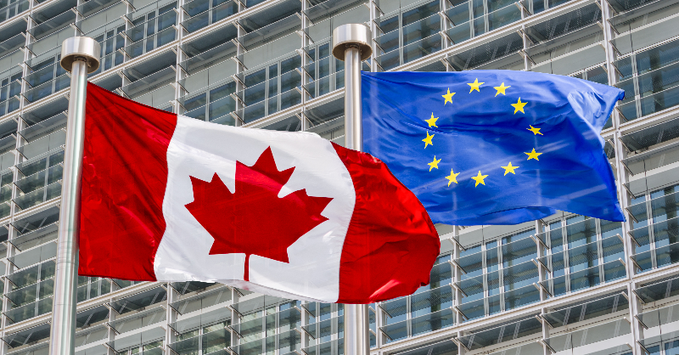
bandera Canadá Europa

The Mutual Recognition Agreement (MRA) for architects with Canada – the first such EU deal covering services – has become binding, facilitating professional mobility and expanding opportunities for architects in Europe and Canada.

In conjunction with the entry into force of the MRA, DG Trade has today launched a dedicated webpage on its Access2Markets web portal. The page provides EU architects with streamlined access to resources and procedural guidance on registration, empowering them to seamlessly transition into international practice.

Adopted in October 2024, the MRA entered into force after the EU and Canada completed their internal approval procedures. It supplements existing advantages for architects under the EU-Canada Comprehensive Economic and Trade Agreement (CETA), which has made the provision of architectural services easier by providing guarantees on the conditions under which EU and Canadian professionals can temporarily provide their services or set up a business in each other’s jurisdictions. It is the first MRA pursuant to CETA and also the first MRA for professional qualifications to be concluded by the EU (existing MRAs cover trade in goods but not in services).

By creating a dedicated recognition process for architectural qualifications, including obtaining a license, the MRA removes barriers for EU architects seeking to work in Canada and vice-versa. This presents exciting new business prospects, allowing European architects to export their world-class skills and engage in the Canadian market.

Conditions for recognition of qualifications 

To get their professional qualifications recognised in Canada, EU architects must have formal qualifications, a valid professional license from a competent authority, and a minimum of 12 years’ relevant education and experience in the field. Language requirements may apply. EU architects must also register with the competent Canadian local authorities (Provinces or Territories) to get permission to work.

More information: European Commission.

Publicaciones relacionadas:

Banderas ucrania y EuropaEU and Ukraine reach agreement in principle on a modernised trade relationship Fotografía representativa del bloque del bloque de representación de la comisión en EspañaTrade countermeasures against US bandera Japón y UEEU and Japan reinforce tech and digital partnership Europe-Japan cooperation in AI-based manufacturing technologies EU and UAE launch free trade talks
International Politics and Cooperation Canada,  Cooperation,  economic security,  European Commission,  Mobility,  News,  Trade,  UE

“This is a space for debate. All comments, for or against publication, that are respectful and do not contain expressions that are discriminatory, defamatory or contrary to current legislation will be published”.

Reader Interactions

Leave a Reply Cancel reply

Your email address will not be published. Required fields are marked *

This site uses Akismet to reduce spam. Learn how your comment data is processed.

Primary Sidebar

Footer

  • CDE Almería
  • Biblioteca Nicolás Salmerón – Universidad de Almería
  • Planta: 1ª, Despacho: 1.05.0B.
  • Ctra. Sacramento s/n. Almería (Spain)
  • Teléfono: (+34) 950 015266

HOME
NEWS
DOCUMENTATION
EUROPE ON THE NET
ABOUT US

  • LEGAL NOTICE
  • PRIVACY POLICY
  • COOKIE POLICY
  • ACCESSIBILITY
  • SITEMAP

Copyright © 2026 CDE Almería · Creative Commons LicenseThis work is licensed under a Creative Commons Attribution-NonCommercial 4.0 International License.

<p>El Centro de Documentación Europea de la Universidad de Almería utiliza cookies propias y de terceros para facilitar al usuario la navegación en su página Web y el acceso a los distintos contenidos alojados en la misma. Asimismo, se utilizan cookies analíticas de terceros para medir la interacción de los usuarios con el sitio Web. Pinche el siguiente enlace si desea información sobre el uso de cookies y como deshabilitarlas. </p>

Politica de privacidad

El Centro de Documentación Europea de la Universidad de Almería utiliza cookies propias y de terceros para facilitar al usuario la navegación en su página Web y el acceso a los distintos contenidos alojados en la misma. Asimismo, se utilizan cookies analíticas de terceros para medir la interacción de los usuarios con el sitio Web. Pinche el siguiente enlace si desea información sobre el uso de cookies y como deshabilitarlas. <a href="/politica-de-cookies" rel="noopener" target="_blank">Más información</a>

Cookies estrictamente necesarias

Las cookies estrictamente necesarias tiene que activarse siempre para que podamos guardar tus preferencias de ajustes de cookies.

Básicamente la web no funcionara bien si no las activas.

Estas cookies son:

  • Comprobación de inicio de sesión.
  • Cookies de seguridad.
  • Aceptación/rechazo previo de cookies.
Cookies de terceros

Esta web utiliza Google Analytics, Google Tag Manager y Yandex Metrika para recopilar información anónima tal como el número de visitantes del sitio, o las páginas más populares.

Dejar estas cookies activas nos permite mejorar nuestra web.

Política de cookies

Pinche el siguiente enlace si desea información sobre el uso de cookies y como deshabilitarlas. Más información