• Skip to primary navigation
  • Skip to main content
  • Skip to primary sidebar
  • Skip to footer
  • Bluesky
  • Facebook
  • Instagram
  • Twitter
  • YouTube
CDE Almería – Centro de Documentación Europea – Universidad de Almería

CDE Almería - Centro de Documentación Europea - Universidad de Almería

Centro de Documentación Europea de la Universidad de Almería

  • HOME
  • WHAT´S ON
    • EU NEWS
    • Activities
    • EU Calls and Awards
    • Radio Program «Europe with You»
  • DOCUMENTATION
    • EU Media Collection
      • Web Space
      • MEDIATHEQUE REPOSITORY
  • Europe on the net
    • Institutions
    • EU Representation in Spain
    • European information network of Andalusia
  • ABOUT US
    • Presentation
    • Services
    • People
    • Contact
  • Spanish
  • English

Four Spanish food products have been added to the EU’s register of geographical indications

Inicio » EU News » Agriculture, Livestock Farming and Fisheries » Geographical indications » Four Spanish food products have been added to the EU’s register of geographical indications

12 de June de 2026

The European Commission has reached a significant milestone in the protection of Europe’s food and drink heritage. With the addition of thirteen new products to the register, the EU now officially protects more than 3,700 geographical indications (GIs) and continues to lead the world in protecting tradition, promoting sustainability and recognising excellence. The new GIs include products from Finland, France, Italy, Romania, Spain and Sweden.
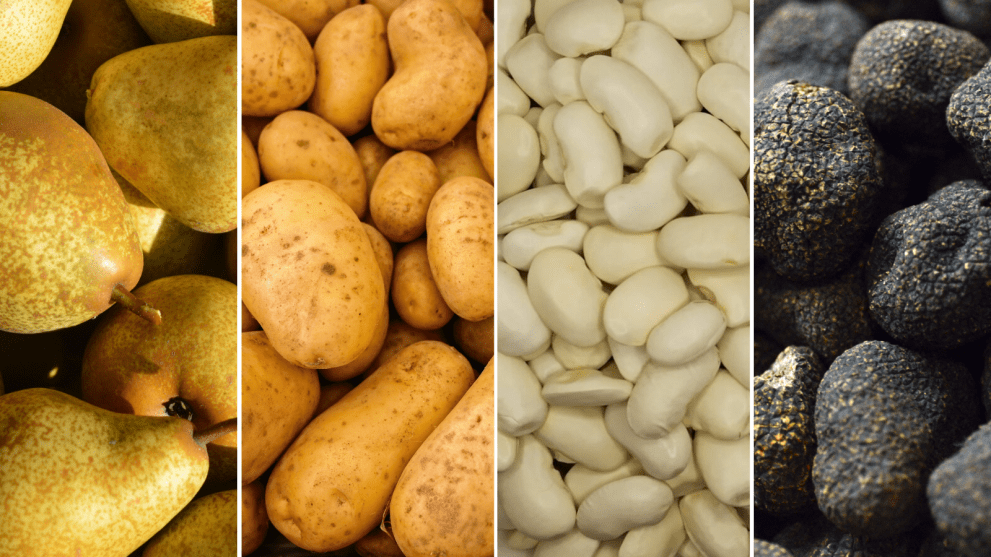
Specifically, in the case of Spain, the following have been added to the register: the Pera del Bierzo, the Patata de Valderredible, the Judión de La Granja and the Trufa negra de Teruel. 

GIs preserve Europe’s food and drink heritage and promote quality products throughout the EU and beyond. They protect the names of products deeply rooted in their regions, ensuring that consumers can trust their origin, quality and traditional production methods. They apply to a wide range of agricultural products, foodstuffs, wines and spirits produced in various regions.

EU geographical indications include protected designations of origin, protected geographical indications and geographical indications. Famous protected geographical indications include, for example, Bayerisches Bier, Champagne, Irish Whiskey, Kalamata olives, Parmigiano Reggiano, Polish Vodka, Manchego cheese and Roquefort. Today’s additions further strengthen a system that generates more than €75 billion in annual sales and supports hundreds of thousands of jobs in rural communities. GIs account for around 15% of the EU’s agri-food exports.

The update to the EU Regulation on geographical indications, which came into force in May 2024, has streamlined and simplified the registration process, whilst strengthening protection against misuse. A new step-by-step guide to geographical indications now helps producers familiarise themselves with the application process.

For further information: European Commission

Publicaciones relacionadas:
The “Somontano Oil” as Protected Designation of Origin Commission approves Spain’s new “Río Negro” geographical indication Commission approves new geographical indication for Spain Commission approves new Spanish geographical indication Commission approves new geographical indications for Italy and Spain
Agriculture, Livestock Farming and Fisheries,  EU News,  Geographical indications European Commission,  European Union,  food products,  geographical indications,  Judión de La Granja,  News,  Patata del Valderredible,  Pera del Bierzo,  Spain,  Trufa negra de Teruel

“This is a space for debate. All comments, for or against publication, that are respectful and do not contain expressions that are discriminatory, defamatory or contrary to current legislation will be published”.

Reader Interactions

Leave a Reply Cancel reply

Your email address will not be published. Required fields are marked *

This site uses Akismet to reduce spam. Learn how your comment data is processed.

Primary Sidebar

Footer

  • CDE Almería
  • Biblioteca Nicolás Salmerón – Universidad de Almería
  • Planta: 1ª, Despacho: 1.05.0B.
  • Ctra. Sacramento s/n. Almería (Spain)
  • Teléfono: (+34) 950 015266

HOME
NEWS
DOCUMENTATION
EUROPE ON THE NET
ABOUT US

  • LEGAL NOTICE
  • PRIVACY POLICY
  • COOKIE POLICY
  • ACCESSIBILITY
  • SITEMAP

Copyright © 2026 CDE Almería · Creative Commons LicenseThis work is licensed under a Creative Commons Attribution-NonCommercial 4.0 International License.

<p>El Centro de Documentación Europea de la Universidad de Almería utiliza cookies propias y de terceros para facilitar al usuario la navegación en su página Web y el acceso a los distintos contenidos alojados en la misma. Asimismo, se utilizan cookies analíticas de terceros para medir la interacción de los usuarios con el sitio Web. Pinche el siguiente enlace si desea información sobre el uso de cookies y como deshabilitarlas. </p>

Politica de privacidad

El Centro de Documentación Europea de la Universidad de Almería utiliza cookies propias y de terceros para facilitar al usuario la navegación en su página Web y el acceso a los distintos contenidos alojados en la misma. Asimismo, se utilizan cookies analíticas de terceros para medir la interacción de los usuarios con el sitio Web. Pinche el siguiente enlace si desea información sobre el uso de cookies y como deshabilitarlas. <a href="/politica-de-cookies" rel="noopener" target="_blank">Más información</a>

Cookies estrictamente necesarias

Las cookies estrictamente necesarias tiene que activarse siempre para que podamos guardar tus preferencias de ajustes de cookies.

Básicamente la web no funcionara bien si no las activas.

Estas cookies son:

  • Comprobación de inicio de sesión.
  • Cookies de seguridad.
  • Aceptación/rechazo previo de cookies.
Cookies de terceros

Esta web utiliza Google Analytics, Google Tag Manager y Yandex Metrika para recopilar información anónima tal como el número de visitantes del sitio, o las páginas más populares.

Dejar estas cookies activas nos permite mejorar nuestra web.

Política de cookies

Pinche el siguiente enlace si desea información sobre el uso de cookies y como deshabilitarlas. Más información