
Today marks a significant milestone in European border security, as the Entry/Exit System (EES) becomes fully operational across all Schengen Area countries.
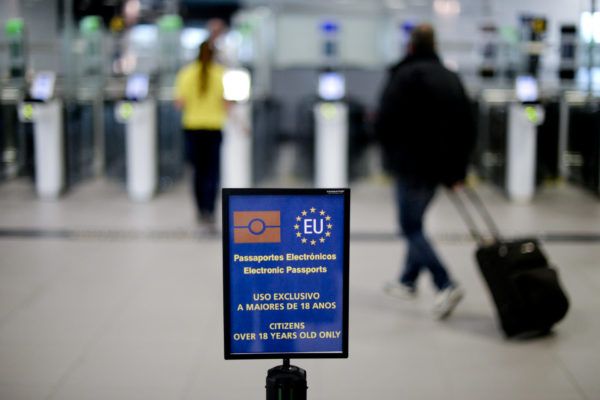
The EES is an advanced IT system that will digitally record the entries and exits of third-country nationals travelling to 29 European countries for short stays. The EES collects biographical and biometric data, as well as other travel information, replacing the previous passport stamping system. It provides reliable data on border crossings, systematically detecting individuals who have exceeded their authorised period of stay, as well as cases of document and identity fraud.
The system began to be rolled out gradually in October 2025. Since its introduction, more than 52 million entries and exits have been recorded, with over 27,000 refusals of entry, of which nearly 700 people were identified as a threat to the security of the Union. With the SES operating at full capacity, it takes, on average, just 70 seconds to register a traveller, which is a very short time for third-country nationals, given the significant added value of entering the EU.
To date, the system has been rolled out at all the EU’s external border crossing points. The Commission remains in close contact with Member States regarding the implementation of the SES.
Henna Virkkunen, Executive Vice-President for Technological Sovereignty, Security and Democracy, said: “The Entry/Exit System represents a significant step forward in strengthening the security of the EU and its citizens. It equips our external borders with modern, interoperable and highly advanced technological systems, reflecting Europe’s commitment to ensuring robust protection of our external borders and overall security. It will enable authorities to detect risks in real time, manage overstays more effectively and strengthen confidence in the Schengen area.”
Magnus Brunner, Commissioner for Home Affairs and Migration, said: “The Entry/Exit System marks an important milestone in the modernisation and strengthening of security at Europe’s external borders. With the EES, we are taking control of who enters and leaves the EU, when and where. The safety of EU citizens remains our top priority, and the EES delivers on this commitment.”
More information: European Commission.
Publicaciones relacionadas:
 The EU and Montenegro have provisionally closed the chapter on trans-European networks in the accession negotiations
 Europe-Japan cooperation in AI-based manufacturing technologies
 New strategy to strengthen prosperity and security with India
 EU and Switzerland signed a broad package of agreements to deepen its relationship
 The Commission coordinates repatriation flights from the Middle East under the EU Civil Protection Mechanism
Leave a Reply